
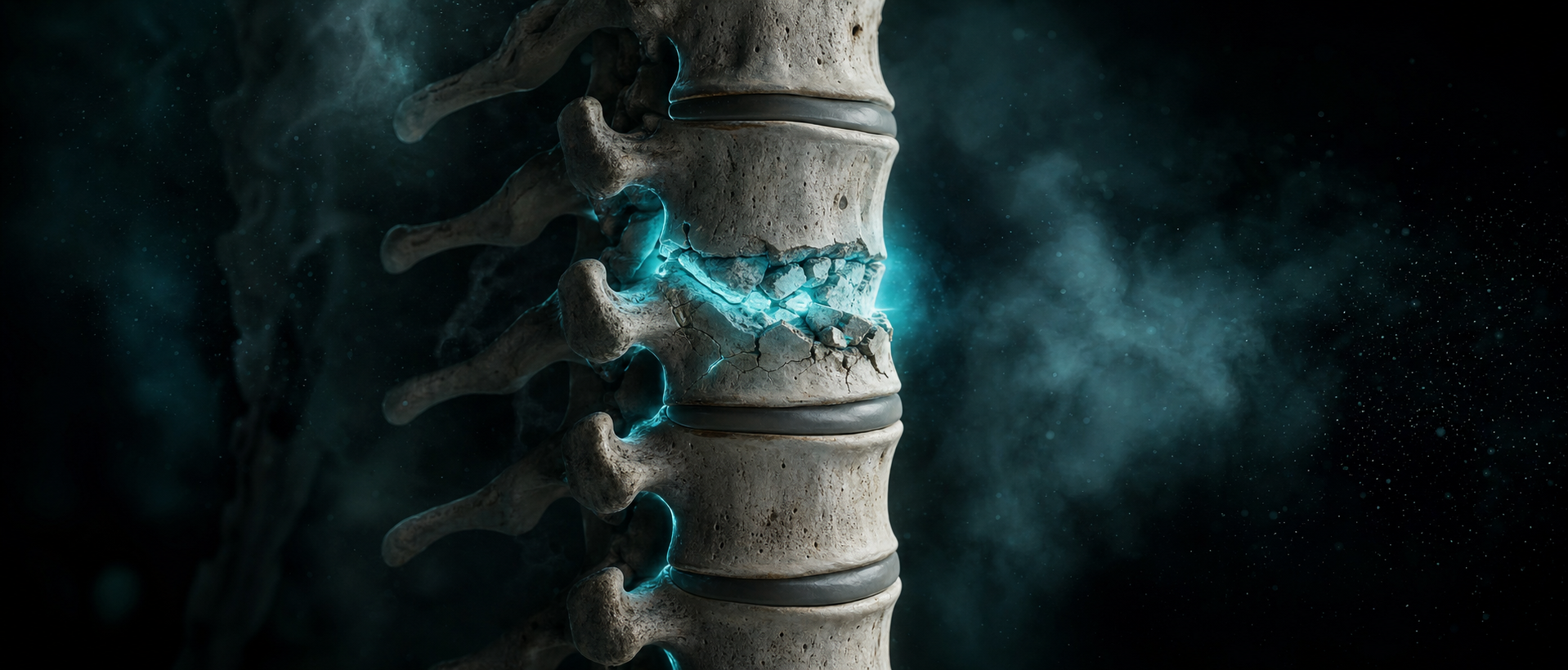
Vertebral Compression Fractures
Overview
A vertebral compression fracture (VCF) occurs when one or more vertebral bodies — the block-shaped bones of the spine — collapse partially or completely under compressive force. These fractures most commonly result from osteoporosis, where weakened bone cannot withstand normal loads, though they can also occur following high-energy trauma or as a complication of spinal tumors. VCFs are the most prevalent type of osteoporotic fracture, affecting an estimated 1.5 million Americans annually, and are a leading cause of sudden-onset back pain in older adults.
Common Symptoms
•Sudden onset of sharp, severe mid or lower back pain, often without a clear traumatic event
•Pain that worsens with standing, walking, or spinal extension
•Relief of pain when lying down
•Gradual loss of height or development of a stooped (kyphotic) posture over time
•Reduced mobility and difficulty performing daily activities
•Rarely, neurological symptoms if fracture fragments compress the spinal cord
Common Causes
•Osteoporosis — the most common underlying cause, especially in postmenopausal women
•Long-term corticosteroid use weakening bone density
•High-impact trauma (falls, motor vehicle accidents) even in younger patients
•Metastatic cancer involving the vertebral body
•Osteogenesis imperfecta or other bone fragility disorders
•Radiation therapy to the spine reducing bone integrity
Who May Benefit from Treatment
Older adults with known osteoporosis who develop sudden back pain, patients whose pain has not resolved after 4–6 weeks of conservative management, and those experiencing functional decline due to fracture-related pain are appropriate candidates for Echo PMR's interventional evaluation.
Treatment Options at Echo PMR
•Vertebroplasty — image-guided injection of bone cement into the fractured vertebra to stabilize it and relieve pain
•Kyphoplasty — a balloon is first inflated to restore vertebral height before cement is injected, reducing deformity
•Epidural steroid injections — manage secondary inflammatory pain around the fracture site
•Medication management — pain control with appropriate analgesics alongside osteoporosis treatment coordination
•Physical therapy — spinal extension strengthening, posture training, and fall prevention after stabilization
•Bracing — thoracolumbar orthoses to offload the fractured segment during healing
Recovery Expectations
Patients who undergo vertebroplasty or kyphoplasty often report significant pain reduction within 24–48 hours of the procedure. Most return to improved functional activity within 1–2 weeks. Addressing the underlying osteoporosis with appropriate medical therapy is essential to prevent future fractures, and Echo PMR coordinates this care as part of a comprehensive plan.
When to Seek Care
If you or a loved one experiences sudden, severe back pain — particularly in the setting of osteoporosis or after a minor fall — contact Echo PMR promptly. Early treatment of vertebral compression fractures can restore height, relieve pain faster, and prevent progressive spinal deformity.