
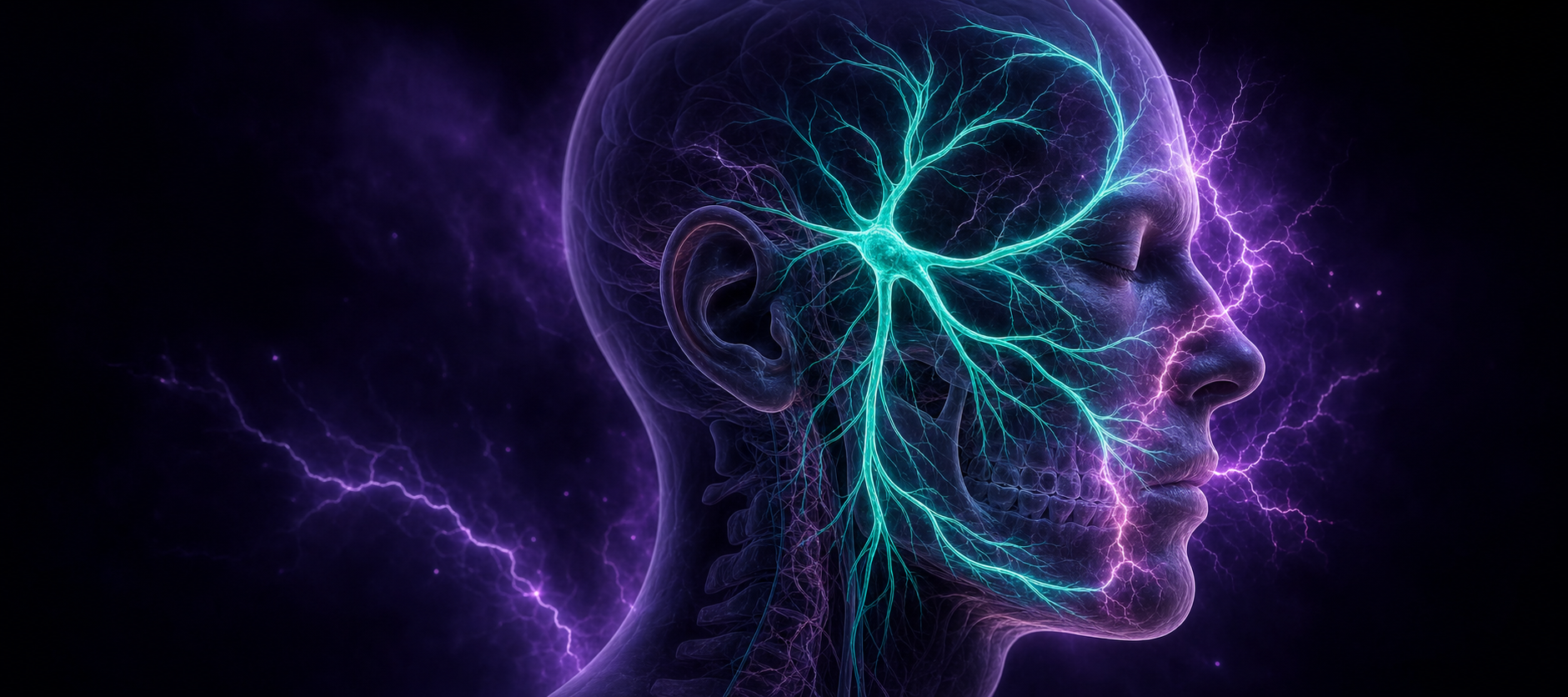
Trigeminal Neuralgia
Overview
Trigeminal neuralgia (TN) is a chronic pain condition involving the trigeminal nerve (cranial nerve V), which carries sensation from the face to the brain. It produces episodes of sudden, severe, electric shock-like facial pain — typically lasting a few seconds to two minutes — triggered by everyday activities such as chewing, speaking, brushing teeth, or a gentle breeze. It is sometimes called "the suicide disease" due to the intensity of its episodes and its profound impact on quality of life.
Common Symptoms
•Sudden, severe, electric or stabbing facial pain on one side
•Pain triggered by touch, chewing, talking, brushing teeth, or cold air
•Pain focused in the cheek, jaw, teeth, gums, lips, or — less commonly — the eye or forehead
•Episodes lasting seconds to two minutes, followed by a pain-free interval
•A dull, aching background pain between episodes in some patients (atypical TN)
•Progressive increase in episode frequency and trigger sensitivity over time
Common Causes
•Blood vessel compression of the trigeminal nerve root at the brainstem (most common cause — classical TN)
•Multiple sclerosis (MS) causing demyelination of the trigeminal nerve
•Tumor or cyst compressing the nerve in the posterior fossa
•Nerve injury from dental procedures, trauma, or facial surgery
•Idiopathic cases where no structural cause is identified (secondary/idiopathic TN)
Who May Benefit from Treatment
Patients experiencing recurrent episodes of severe, unilateral facial pain — particularly pain triggered by routine activities — should seek a neurology or pain management evaluation. Those whose pain is inadequately controlled on first-line medications, or who cannot tolerate drug side effects, are strong candidates for interventional procedures at Echo PMR.
Treatment Options at Echo PMR
•Trigeminal nerve blocks (peripheral or Gasserian ganglion) using local anesthetic with or without corticosteroid
•Pulsed radiofrequency ablation (RFA) of the Gasserian ganglion for durable, non-destructive pain relief
•Medication management with anticonvulsants (carbamazepine, oxcarbazepine) and adjuvant agents as first-line therapy
•Spinal cord stimulation (SCS) consideration and referral coordination for complex or refractory cases
•Ketamine infusion therapy for refractory TN with central sensitization components
•Multidisciplinary coordination with neurosurgery for patients who may be candidates for microvascular decompression (MVD)
Recovery Expectations
Medical management controls pain effectively in many patients initially, but the condition is often progressive. Interventional procedures such as nerve blocks and radiofrequency ablation provide meaningful pain reduction in a high proportion of patients, with relief often lasting six to 24 months per treatment course. The goal of care at Echo PMR is to minimize episode frequency, reduce trigger sensitivity, and restore the ability to eat, speak, and live without fear of the next attack.
When to Seek Care
If you experience sudden, severe electric pain in your face — even if it lasts only seconds — do not dismiss it as a dental problem or ordinary headache. Contact Echo PMR for a diagnostic evaluation, as trigeminal neuralgia responds best to early, accurate treatment before the condition becomes refractory.