
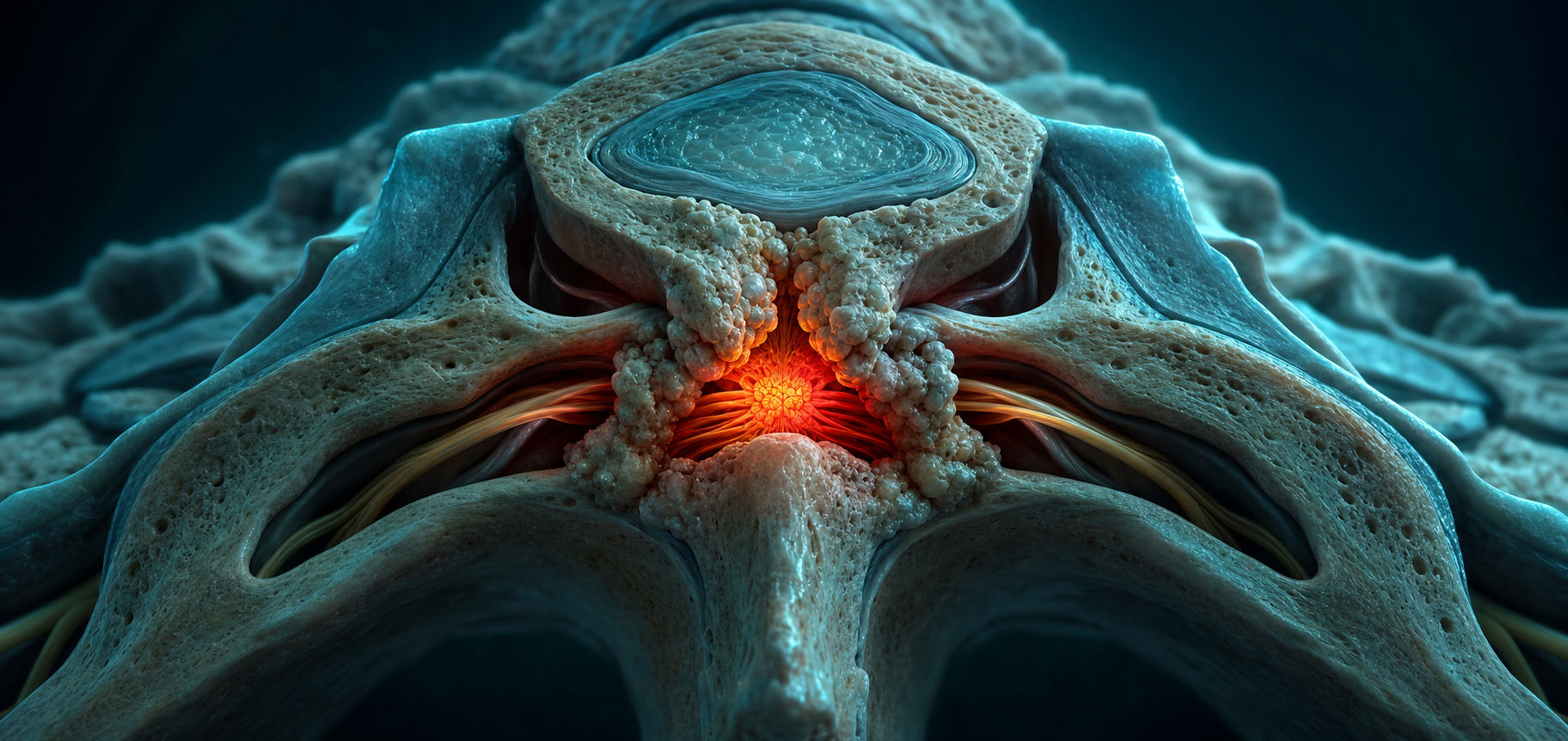
Spinal Stenosis
Overview
Spinal stenosis is a narrowing of the spaces within the spine — most commonly in the lumbar (lower back) or cervical (neck) regions — that places pressure on the spinal cord and the nerves traveling through it. The condition is most often the result of degenerative changes that accumulate gradually over decades. As the canal narrows, nerves become compressed, producing a recognizable pattern of pain and neurological symptoms that can significantly limit daily life.
Common Symptoms
•Aching pain in the lower back, buttocks, or thighs
•Leg pain, cramping, or heaviness that worsens with walking or standing (neurogenic claudication)
•Numbness, tingling, or weakness in one or both legs
•Relief of symptoms when sitting down, leaning forward, or flexing at the waist
•Neck pain with arm numbness or weakness (cervical stenosis)
•Difficulty with balance or coordination in advanced cases
Common Causes
•Degenerative arthritis (osteoarthritis) causing bone spur formation
•Thickening or buckling of the ligamentum flavum ligament
•Herniated discs narrowing the spinal canal
•Spondylolisthesis (vertebral slippage) reducing canal space
•Congenital narrow spinal canal
•Prior spinal surgery leading to scar tissue formation
Who May Benefit from Treatment
Adults over 50 experiencing progressive leg pain with walking, lower back stiffness, or neurological symptoms that limit their activity level are prime candidates for evaluation. Echo PMR also treats younger patients with congenital stenosis or post-traumatic narrowing.
Treatment Options at Echo PMR
•Lumbar epidural steroid injections — reduce inflammation around compressed nerve roots to relieve leg and back pain
•Caudal epidural injections — deliver anti-inflammatory medication through the sacral hiatus to bathe multiple lumbar nerve roots
•Medial branch blocks and radiofrequency ablation (RFA) — address the facet arthritis component contributing to canal narrowing
•Physical therapy — flexion-based exercise programs that open the spinal canal and strengthen core stabilizers
•Medication management — neuropathic pain agents and anti-inflammatories to manage day-to-day symptoms
•Spinal cord stimulation — an option for patients with severe, refractory neurogenic claudication
Recovery Expectations
While spinal stenosis is a progressive degenerative condition, most patients achieve meaningful pain reduction and improved walking tolerance with consistent interventional and rehabilitative care. Many patients manage their condition effectively for years without surgery. Treatment plans are individualized, with realistic goals centered on restoring functional independence and quality of life.
When to Seek Care
If walking even short distances has become painful or impossible, or if you are experiencing leg weakness and balance problems, schedule an evaluation at Echo PMR. Prompt care can slow symptom progression and preserve your mobility.