
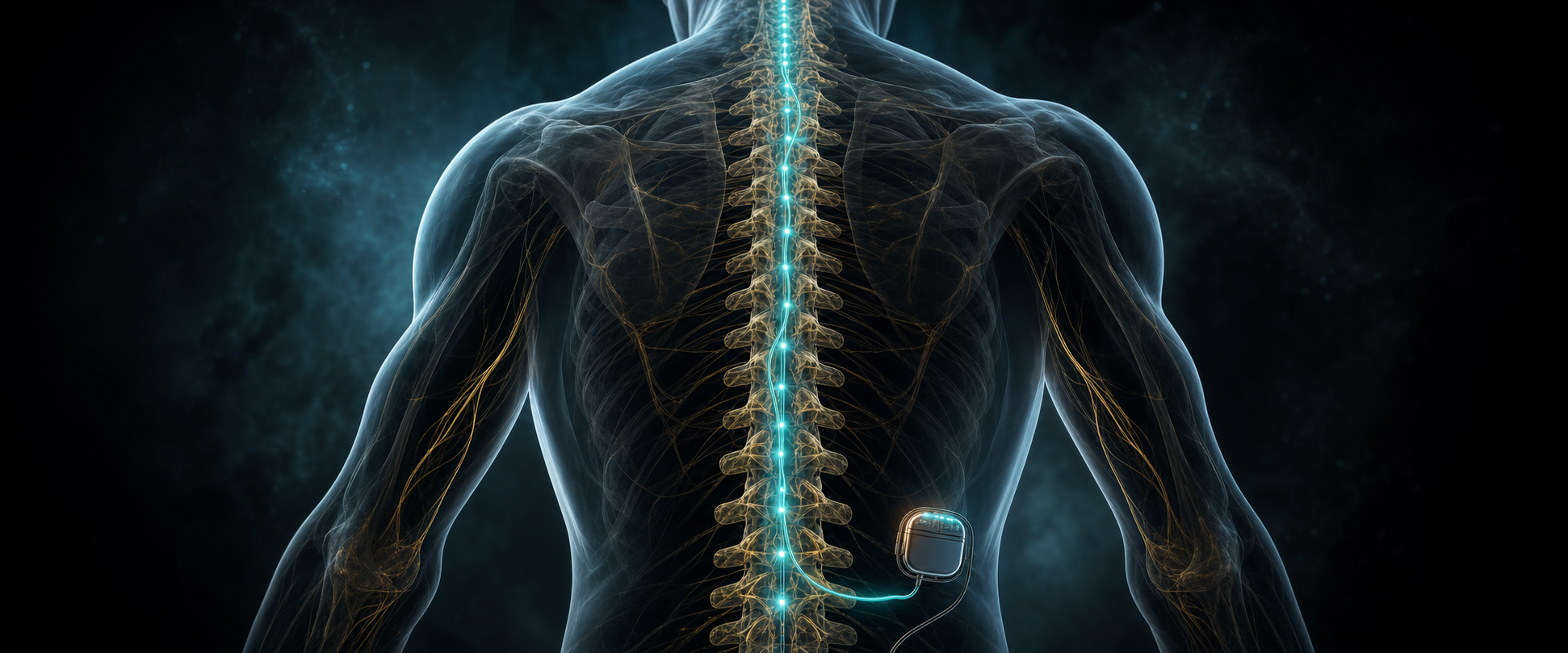
Spinal Cord Stimulation (SCS)
What Is Spinal Cord Stimulation?
Spinal cord stimulation (SCS) is an advanced neuromodulation therapy that uses a small implanted device to deliver carefully calibrated electrical pulses to the spinal cord. These pulses interfere with pain signals traveling to the brain, replacing the sensation of pain with a mild tingling — or in newer systems, no sensation at all. SCS is considered for patients with chronic, difficult-to-treat pain who have not responded to other treatments.
How It Works
•Thin, flexible leads are implanted in the epidural space adjacent to the spinal cord.
•The leads connect to a small pulse generator (IPG) implanted beneath the skin, similar to a pacemaker.
•Electrical stimulation modulates pain signal transmission at the dorsal horn of the spinal cord, reducing the perception of pain without affecting normal sensation or strength.
What to Expect During the Procedure
•Trial phase first: A temporary trial of 5–7 days is performed before permanent implant to confirm effectiveness.
•Implant procedure: Permanent implant is a minimally invasive outpatient or short-stay procedure.
•Duration: The implant procedure takes approximately 1–2 hours.
•Anesthesia: Typically light sedation and local anesthetic; general anesthesia may be used for the generator pocket.
•Same-day or next-day discharge: Most patients return home within 24 hours of the permanent implant.
Conditions Treated
•Failed Back Surgery Syndrome (FBSS)
•Complex Regional Pain Syndrome (CRPS)
•Chronic radiculopathy (arm or leg pain from nerve compression)
•Peripheral neuropathy
•Diabetic neuropathy
•Refractory angina and peripheral vascular disease pain
Who Is a Good Candidate?
SCS is appropriate for patients with chronic neuropathic or radicular pain lasting more than 6 months who have not found adequate relief with medications, injections, or surgery — and who pass a psychological evaluation confirming they are mentally and emotionally prepared for an implantable device. A successful trial period (50%+ pain reduction) is required before permanent implantation.
Recovery & Results
Most patients are up and moving within hours of the permanent implant procedure. Activity restrictions (no bending, twisting, or lifting) apply for 4–6 weeks during lead stabilization. Clinical data consistently shows that well-selected SCS patients experience 50–80% pain reduction, significant improvement in quality of life, and reduced opioid use. Device settings can be adjusted non-invasively by your care team as your needs change.
Frequently Asked Questions
Can I try SCS before committing to a permanent implant?
Yes — and this is standard practice. A temporary trial period of 5–7 days lets you experience the therapy before any permanent decisions are made.
Will SCS interfere with MRI scans?
Many modern SCS systems are MRI-conditional, meaning MRI scans may be performed under specific conditions. Your Echo PMR team will provide detailed guidance based on your specific device.
How long does the implanted device last?
Rechargeable pulse generators can last 8–10+ years. Non-rechargeable devices typically last 3–5 years before requiring replacement. Battery life depends on stimulation settings.