
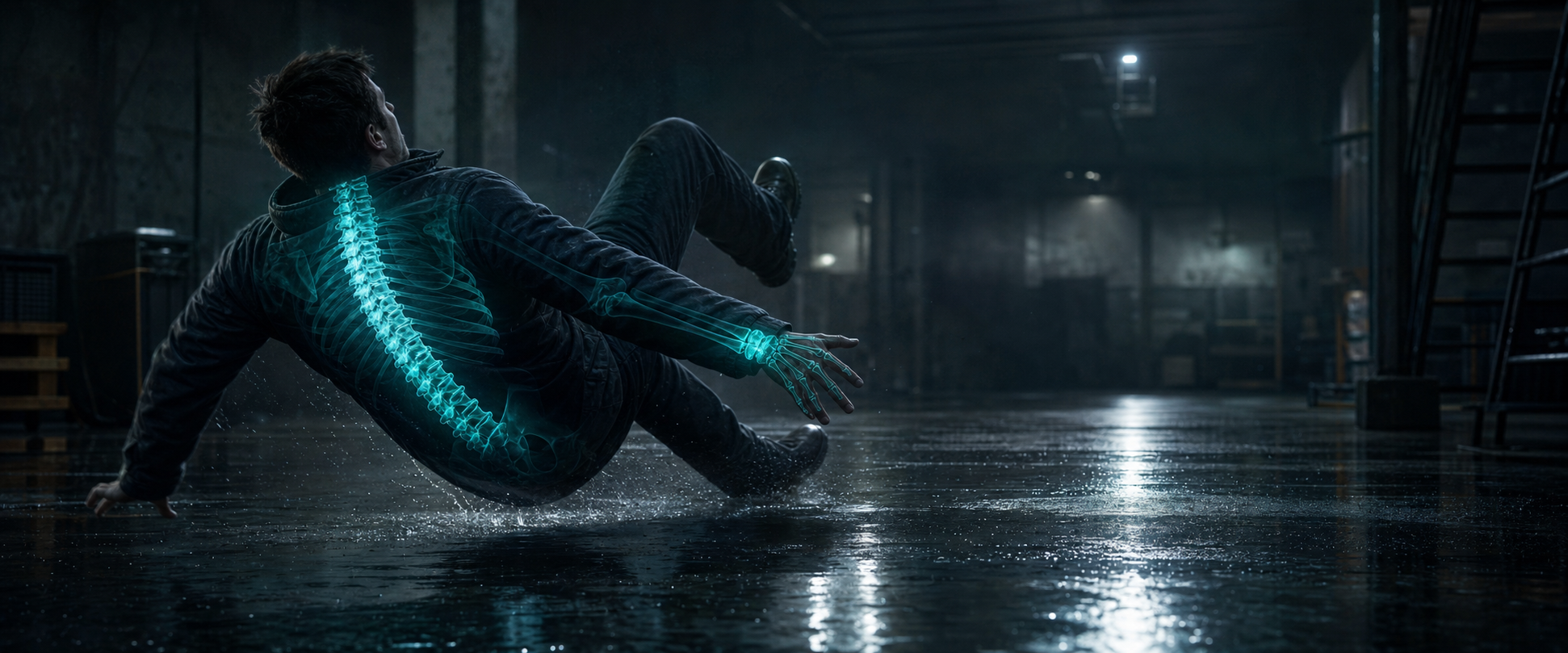
Slip, Trip & Fall Injuries
Overview
Slip, trip, and fall accidents are among the most common causes of acute injury in both workplace and everyday settings. These incidents can result in damage to the spine, hips, knees, shoulders, and wrists — and may cause soft tissue injuries, fractures, nerve compression, or joint damage. Because some injuries are not immediately apparent, a comprehensive evaluation is essential after any significant fall.
Common Symptoms
•Lower back or tailbone pain following impact with the ground
•Hip or knee pain and swelling
•Shoulder or wrist pain from bracing during a fall
•Neck pain or headaches from the jolt of impact
•Numbness or tingling in the arms or legs
•Difficulty bearing weight or walking normally
Common Causes
•Wet, uneven, or slippery floor surfaces
•Poorly maintained walkways, stairs, or parking lots
•Inadequate lighting in public or workplace areas
•Tripping over obstacles or loose flooring
•Loss of balance due to medical conditions or medications
•Ice or weather-related hazards outdoors
Who May Benefit from Treatment
Any patient who has experienced a significant fall and is dealing with persistent pain, mobility limitations, or neurological symptoms — whether the incident occurred at work, in a store, on a sidewalk, or at home — can benefit from Echo PMR's expert evaluation and pain management care.
Treatment Options at Echo PMR
•Lumbar epidural steroid injections for back and nerve pain from spinal impact
•SI joint injections for tailbone, sacral, and pelvic pain following a fall
•Medial branch blocks and RFA for facet joint pain resulting from the impact
•Intra-articular joint injections for hip, knee, or shoulder pain
•Trigger point injections for muscle spasm and myofascial pain patterns
•Physical therapy to restore balance, strength, and joint mobility
Recovery Expectations
Recovery from fall-related injuries depends on the structures involved and the severity of the impact. Many patients experience substantial improvement with a combination of interventional procedures and rehabilitation within weeks to a few months. Echo PMR's goal is to address both immediate pain and underlying structural damage to prevent long-term complications.
When to Seek Care
If pain, swelling, or neurological symptoms persist more than 24–48 hours after a fall — or if you are unable to bear weight or move a joint normally — contact Echo PMR promptly. Imaging and a specialist evaluation can identify injuries that standard urgent care may miss.