
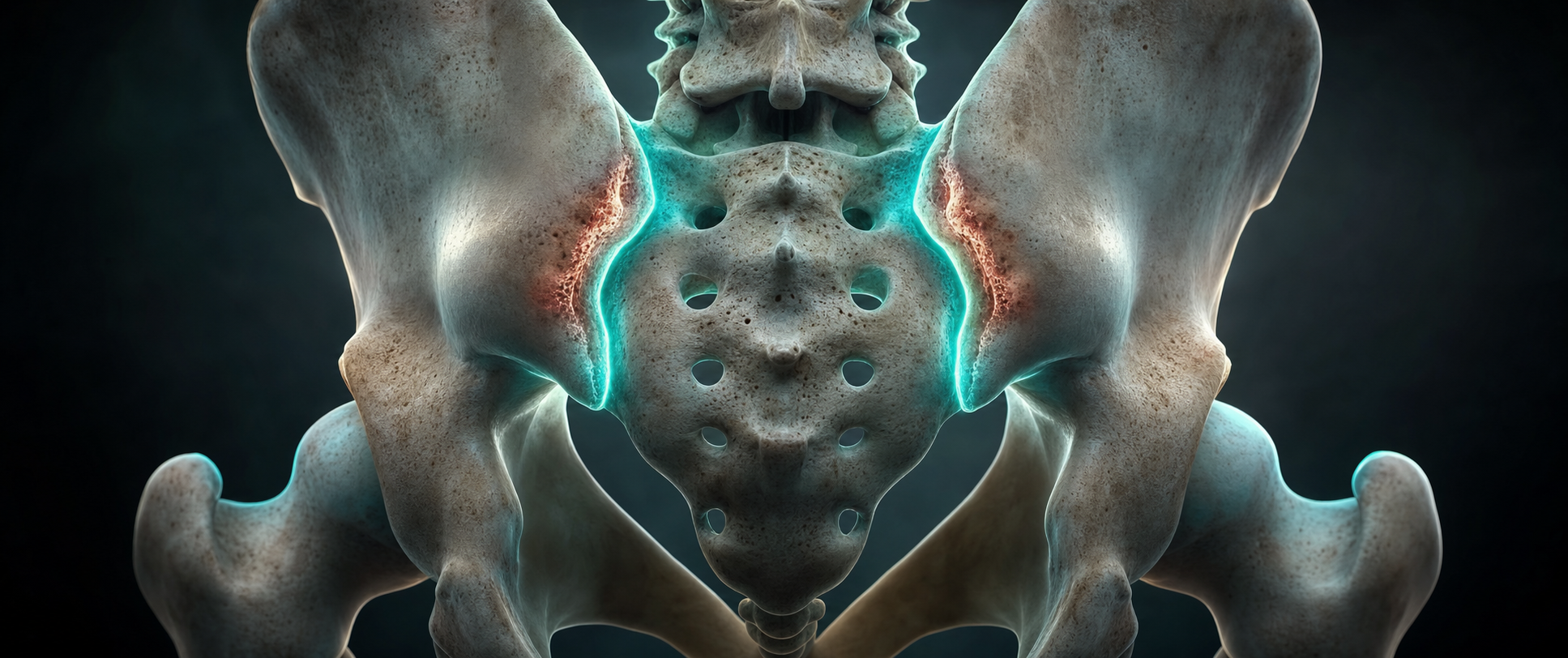
Sacroiliac (SI) Joint Dysfunction
Overview
The sacroiliac (SI) joints connect the sacrum at the base of the spine to the iliac bones of the pelvis, playing a critical role in transferring load between the upper body and the legs. When these joints become inflamed, hypermobile, or hypomobile — due to injury, arthritis, pregnancy, or altered gait — the result is SI joint dysfunction. This condition is a significant and commonly underdiagnosed cause of lower back and buttock pain, responsible for up to 25% of chronic low back pain cases.
Common Symptoms
•Dull or sharp pain in the lower back, buttock, or hip
•Pain that radiates into the groin, thigh, or occasionally the knee
•Discomfort when rising from a seated position, climbing stairs, or sleeping on the affected side
•Stiffness and reduced range of motion in the lower back or pelvis
•Pain that worsens with prolonged sitting or standing
•A feeling of pelvic instability or "giving way"
Common Causes
•Trauma such as a fall, motor vehicle accident, or sports injury
•Pregnancy and postpartum ligament laxity
•Leg length discrepancy creating asymmetric pelvic loading
•Prior lumbar spinal fusion altering load transfer to SI joints
•Inflammatory arthropathies (ankylosing spondylitis, psoriatic arthritis)
•Degenerative joint disease of the sacroiliac joint
Who May Benefit from Treatment
Patients with one-sided lower back or buttock pain — especially those who have had prior lumbar surgery, are postpartum, or have been told their spine imaging is "normal" — often have undiagnosed SI joint dysfunction. Echo PMR uses both clinical assessment and image-guided diagnostic injections to confirm the diagnosis.
Treatment Options at Echo PMR
•SI joint injections — fluoroscopy- or ultrasound-guided corticosteroid injections that confirm the diagnosis and provide therapeutic relief
•Radiofrequency ablation (RFA) of SI joint nerves — longer-term pain relief by ablating the sensory nerves supplying the joint
•Physical therapy — pelvic stabilization exercises, manual therapy, and gait retraining to restore joint mechanics
•Sacroiliac belt or orthotics — adjunctive support for patients with pelvic instability
•Medication management — anti-inflammatories and muscle relaxants to manage acute flares
•Trigger point injections — address secondary gluteal and piriformis muscle pain
Recovery Expectations
Many patients achieve significant relief following SI joint injection, often within days. When RFA is performed, pain relief typically lasts 12–18 months and can be repeated. Incorporating pelvic stabilization physical therapy alongside procedural care provides the most durable long-term outcomes.
When to Seek Care
If you have lower back or buttock pain that has been unresponsive to treatment, or if prior spine imaging did not explain your symptoms, an SI joint evaluation at Echo PMR could identify the true source of your pain. Don't let a misdiagnosis delay your recovery.