
Rotator Cuff & Shoulder Injuries
Overview
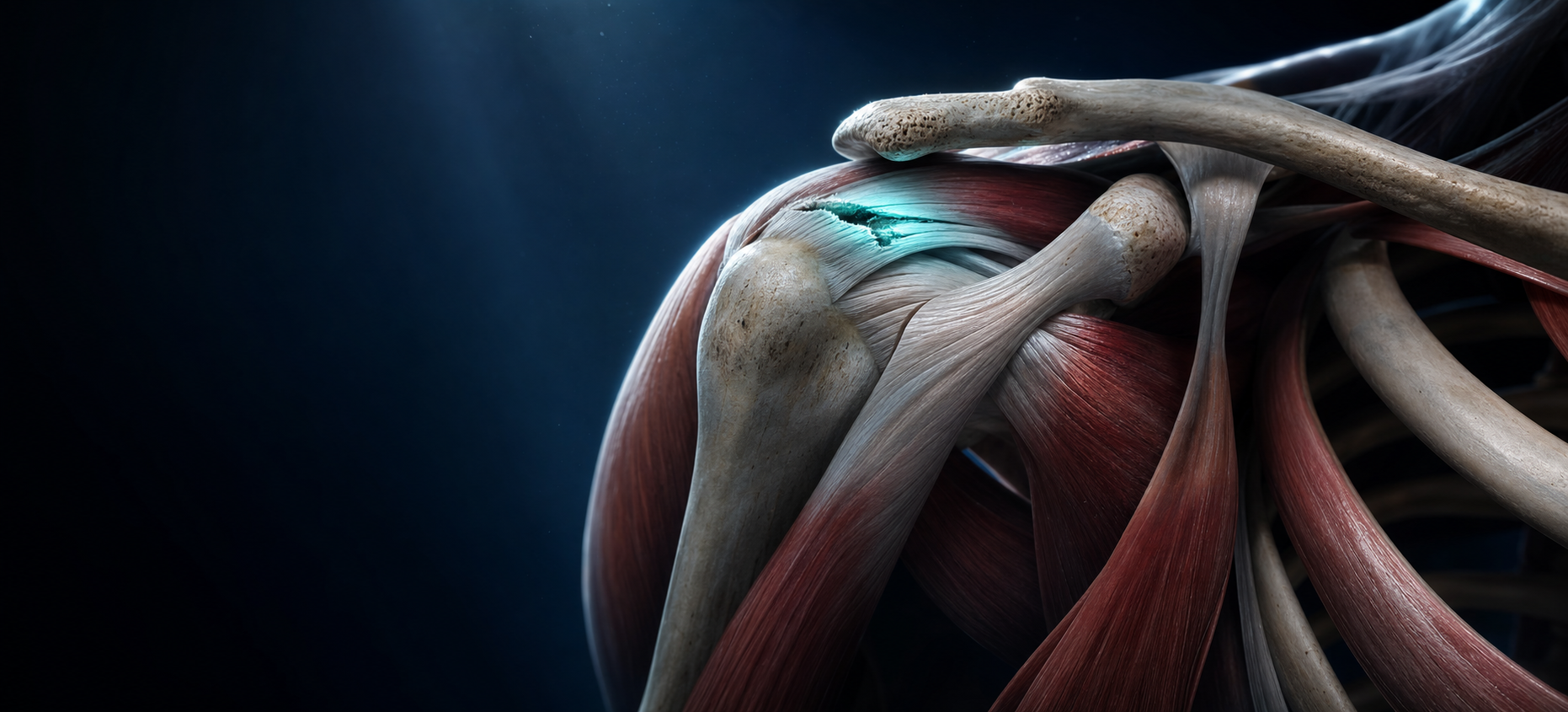
The rotator cuff is a group of four muscles and their tendons that stabilize the shoulder joint and allow a wide range of arm motion. Injury to any part of this complex — whether through acute trauma, repetitive overhead activity, or age-related degeneration — can result in significant pain, weakness, and functional limitation. Rotator cuff injuries range from mild tendinitis and impingement to partial or full-thickness tears.
Common Symptoms
•Deep, aching shoulder pain, especially at night or when lying on the affected side
•Pain with overhead reaching, lifting, or reaching behind the back
•Weakness when raising or rotating the arm
•A clicking or popping sensation in the shoulder
•Reduced range of motion and difficulty with daily tasks
•Acute, sharp pain following a traumatic event (fall, collision)
Common Causes
•Repetitive overhead activities (throwing, swimming, painting, construction work)
•Age-related tendon degeneration (most common in adults over 40)
•Acute trauma such as a fall onto an outstretched arm
•Motor vehicle accidents with shoulder impact or seatbelt loading
•Poor posture and shoulder blade mechanics over time
•Workplace injuries from heavy lifting or awkward arm positions
Who May Benefit from Treatment
Patients with partial rotator cuff tears, shoulder impingement, tendinitis, or bursitis who want to avoid or delay surgery are excellent candidates for Echo PMR's interventional approach. Those recovering from shoulder surgery who continue to experience pain are also strong candidates.
Treatment Options at Echo PMR
•Subacromial corticosteroid injections for shoulder impingement and bursitis
•Intra-articular shoulder joint injections to reduce inflammation and improve mobility
•Trigger point injections targeting the rotator cuff and periscapular muscles
•Nerve blocks for acute or post-operative shoulder pain management
•Physical therapy and rehabilitation to restore shoulder strength, mobility, and mechanics
•Medication management to support recovery during the rehabilitation process
Recovery Expectations
Many patients with non-surgical rotator cuff conditions experience significant improvement with a structured treatment plan combining interventional procedures and physical therapy over six to twelve weeks. Results vary based on tear size and chronicity, but most patients regain meaningful function and pain relief without surgery. Echo PMR will clearly communicate when surgical referral is appropriate.
When to Seek Care
If shoulder pain is interfering with your sleep, limiting arm movement, or not improving after several weeks of rest and home care, contact Echo PMR for a comprehensive evaluation. Prompt treatment prevents compensatory injuries and reduces the risk of a partial tear progressing to a complete rupture.