
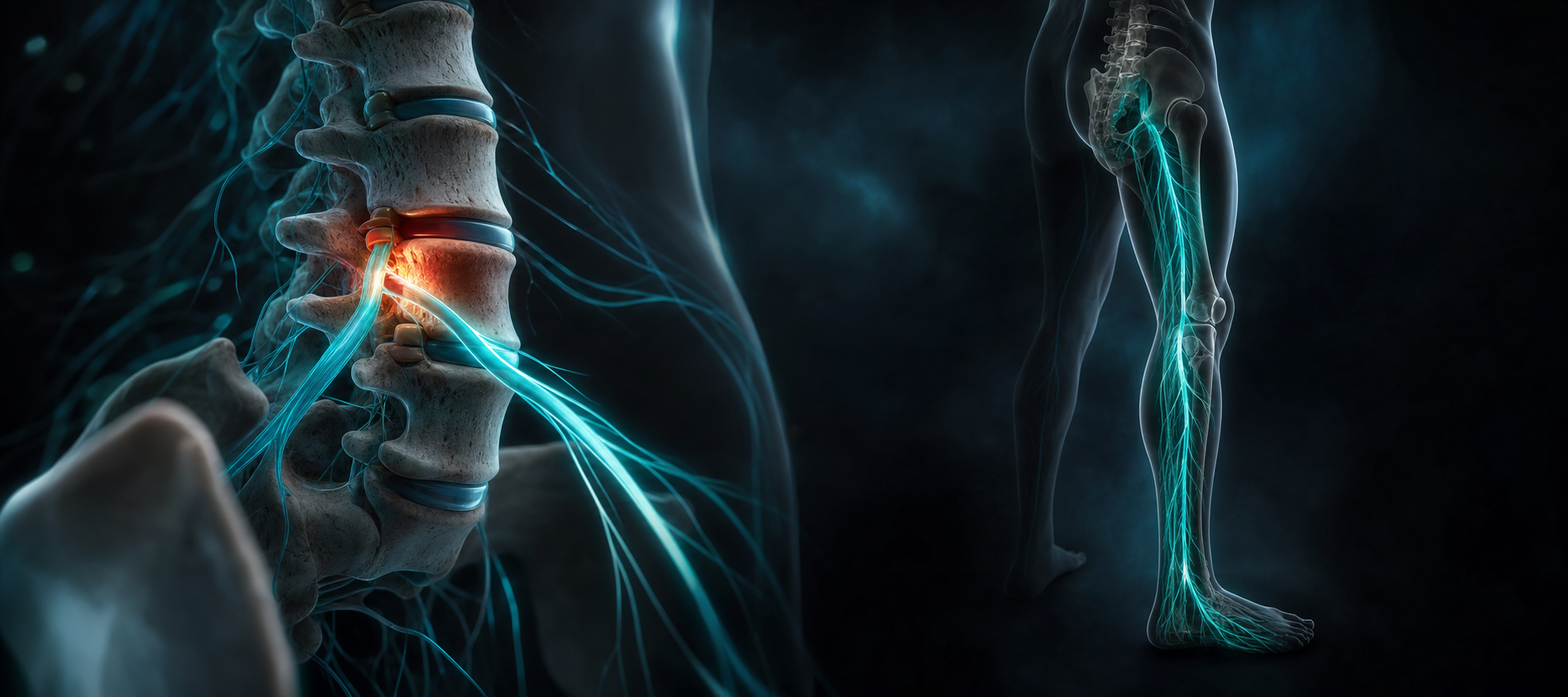
Radiculopathy (Pinched Nerve)
Overview
Radiculopathy, commonly called a "pinched nerve," occurs when a nerve root in the spine becomes compressed, inflamed, or irritated. This pressure interferes with the nerve's normal signals, producing pain, tingling, numbness, or weakness that often radiates from the spine into the arms or legs. The condition can affect the cervical (neck), thoracic (mid-back), or lumbar (lower back) regions, with cervical and lumbar radiculopathy being the most common.
Common Symptoms
•Sharp, shooting, or burning pain that travels down the arm or leg
•Numbness or tingling in the fingers, hand, foot, or toes
•Muscle weakness in the affected limb
•A sensation of "pins and needles" along the nerve path
•Worsening pain with certain movements, sneezing, or coughing
•Reduced reflexes in the arm or leg on the affected side
Common Causes
•Herniated or bulging intervertebral disc pressing on a nerve root
•Spinal stenosis (narrowing of the spinal canal or foramina)
•Bone spurs (osteophytes) from degenerative arthritis
•Spondylolisthesis (vertebral slippage) compressing adjacent nerves
•Disc degeneration reducing the space available for nerve roots
•Trauma or injury causing acute nerve compression
Who May Benefit from Treatment
Patients experiencing persistent radiating pain, numbness, or weakness that has not responded to rest or conservative home care are strong candidates for evaluation. Those whose symptoms are affecting daily activities, work performance, or sleep quality should seek a professional assessment promptly.
Treatment Options at Echo PMR
•Epidural steroid injections — deliver anti-inflammatory medication directly to the affected nerve root to reduce swelling and pain
•Transforaminal nerve blocks — target the specific foramen where the compressed nerve exits the spine
•Medial branch blocks — identify and relieve facet-mediated contributions to nerve irritation
•Physical therapy — guided exercises to decompress nerve roots, strengthen supporting muscles, and improve posture
•Medication management — neuropathic agents, anti-inflammatories, and muscle relaxants tailored to your pain profile
•Spinal cord stimulation — considered for chronic, refractory radicular pain that has not responded to other interventions
Recovery Expectations
Many patients experience meaningful relief within days to weeks following targeted injections combined with physical therapy. Full recovery timelines vary based on the degree of nerve compression and how long symptoms have been present, but most patients see significant functional improvement within 6–12 weeks of a structured treatment plan. Early intervention consistently produces better long-term outcomes.
When to Seek Care
Contact Echo PMR if you are experiencing radiating arm or leg pain lasting more than a few weeks, or if you develop sudden weakness, loss of bladder or bowel control, or severe pain that limits your ability to function — these symptoms warrant urgent evaluation.