
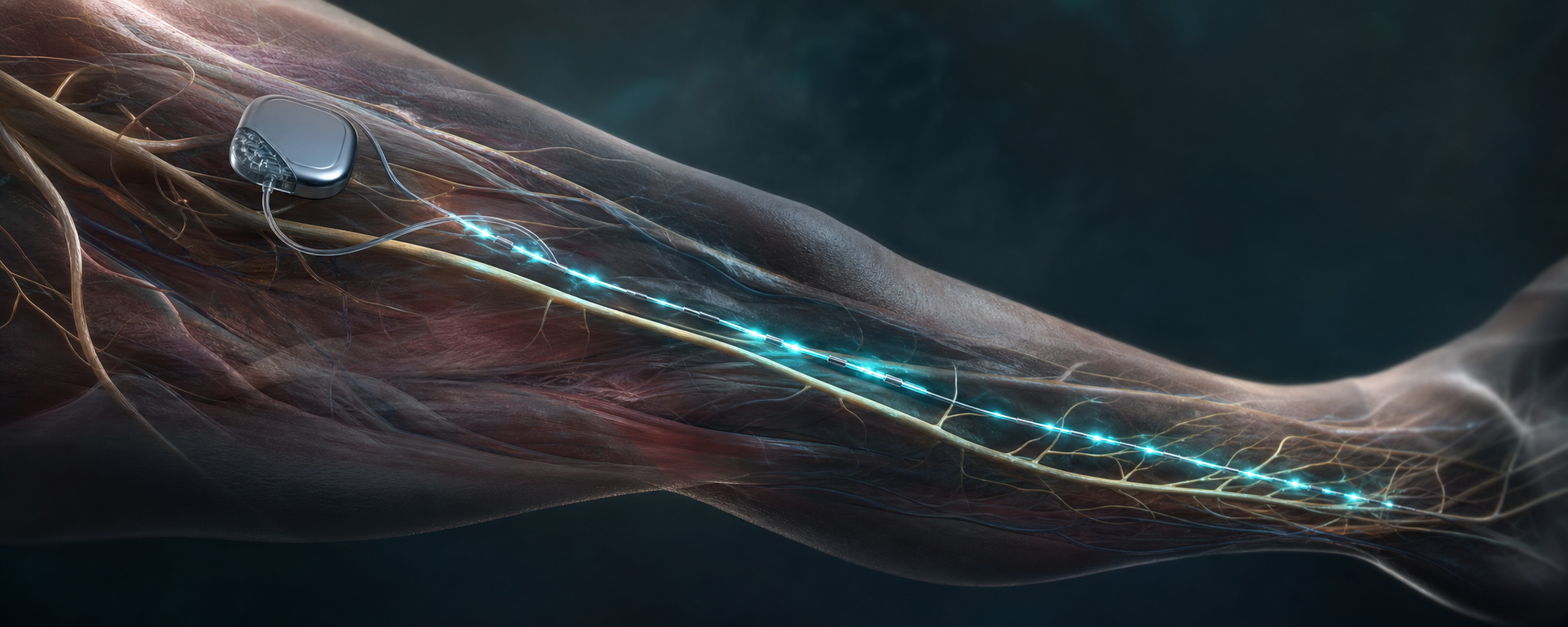
Peripheral nerve stimulation (PNS)
What Is Peripheral Nerve Stimulation?
Peripheral nerve stimulation (PNS) is a minimally invasive neuromodulation treatment that places a small electrode lead directly adjacent to a specific peripheral nerve outside the brain and spinal cord. The lead delivers gentle electrical pulses that disrupt pain signals from that nerve, providing targeted relief for localized chronic pain conditions. Unlike spinal cord stimulation, PNS targets individual nerves throughout the body — making it effective for pain in the limbs, head, face, and trunk.
How It Works
•Using ultrasound or fluoroscopic guidance, a thin lead electrode is placed alongside the target nerve through a small needle.
•A pulse generator (worn externally or implanted) delivers programmable electrical stimulation to the nerve.
•The electrical signal modulates nerve activity, reducing or eliminating the pain signals the nerve transmits to the brain.
What to Expect During the Procedure
•Preparation: Skin is sterilized; local anesthetic is applied at the insertion site.
•Duration: Placement typically takes 20–45 minutes depending on the target nerve.
•Anesthesia: Local anesthetic with optional light sedation; no general anesthesia required for most placements.
•Trial option: A temporary trial lead may be placed first before a permanent system is implanted.
•Same-day recovery: Most patients go home the same day.
Conditions Treated
•Occipital neuralgia and chronic migraines
•Chronic shoulder, knee, or ankle pain
•Post-amputation and phantom limb pain
•Chronic post-surgical pain
•Intercostal neuralgia
•Lateral femoral cutaneous nerve pain (meralgia paresthetica)
Who Is a Good Candidate?
PNS is well suited for patients with localized neuropathic pain that has been mapped to a specific peripheral nerve and has not responded to nerve blocks, medications, or physical therapy. Patients who want targeted therapy without affecting the spinal cord are particularly good candidates.
Recovery & Results
Most patients experience minimal downtime after PNS lead placement and resume normal light activity within days. When an external generator is used, the device is worn for a defined treatment course (commonly 60 days) with many patients reporting sustained relief well beyond the active treatment period. Permanently implanted systems provide ongoing, adjustable relief. PNS offers a highly targeted alternative for patients with well-defined focal pain generators.
Frequently Asked Questions
How is PNS different from spinal cord stimulation?
SCS targets pain broadly through spinal cord pathways, while PNS targets a single, specific peripheral nerve. PNS is ideal for focal pain conditions; SCS is often chosen for widespread or bilateral pain.
Is PNS reversible?
Yes. External systems are removed at the end of the treatment course. Permanent leads can also be removed or revised. The procedure does not alter nerve anatomy.
How quickly will I feel relief?
Some patients notice improvement within days of starting stimulation. Full therapeutic benefit is typically experienced within 1–4 weeks of consistent use.