
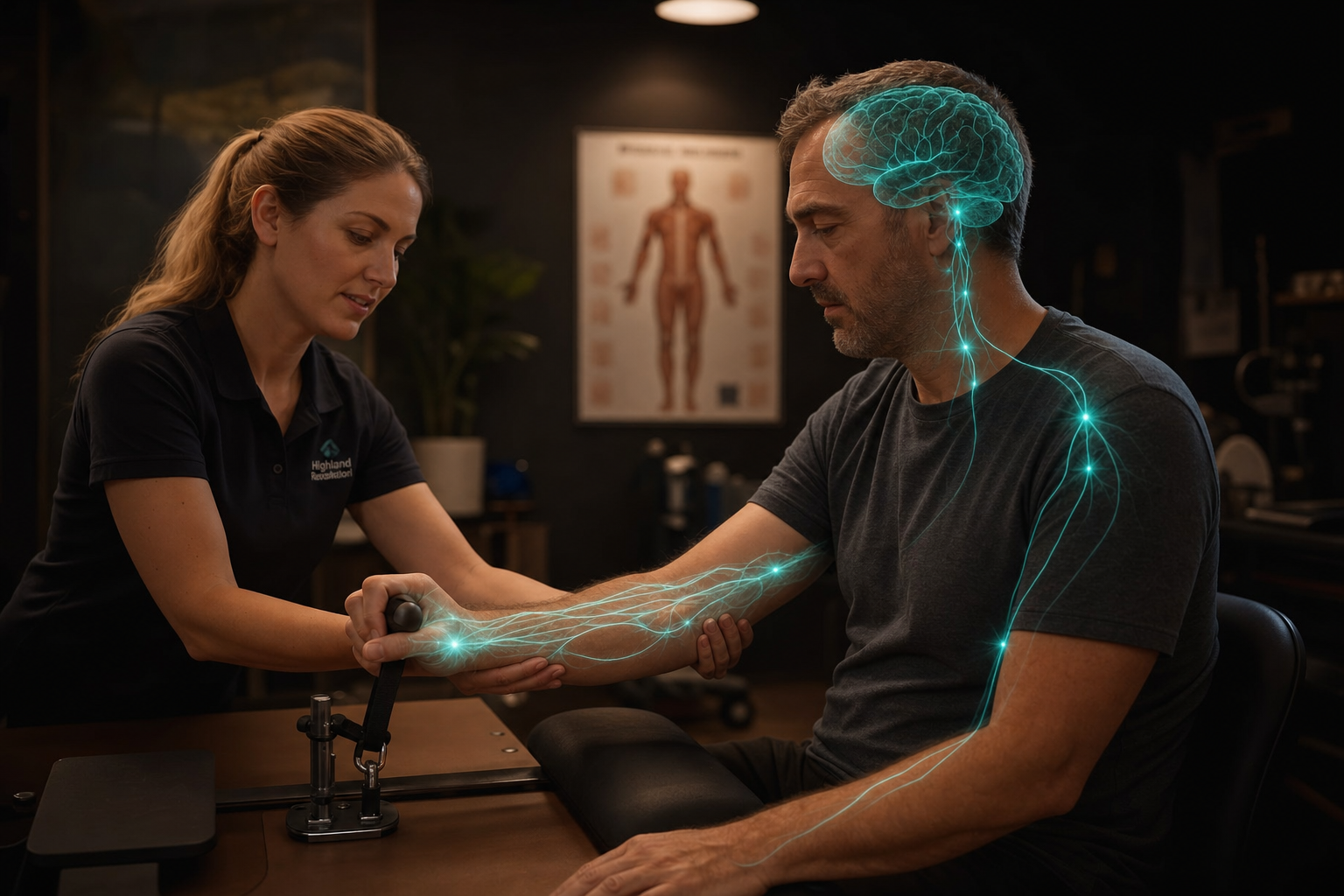
What Is Occupational Therapy?
What Is Occupational Therapy?
Occupational therapy (OT) focuses on helping people perform the meaningful daily activities — or "occupations" — that define quality of life: getting dressed, preparing meals, returning to work, or caring for a family. When pain, injury, or neurological change disrupts these abilities, an occupational therapist identifies practical strategies, adaptive techniques, and targeted exercises to restore independence. At Echo PMR, OT is delivered as part of an integrated rehabilitation approach tailored to each patient's unique lifestyle demands.
How It Works
Your occupational therapist will assess how your condition affects functional tasks specific to your daily routine — at home, at work, or in the community. Treatment may include activity modification, ergonomic recommendations, adaptive equipment training, upper extremity rehabilitation, and cognitive-functional strategies. The goal is not just symptom management but restoring your ability to fully participate in the life you want to live.
What to Expect During the Procedure
•Initial assessment: A 45–60 minute evaluation of your functional abilities, home/work environment, and personal goals.
•Individualized program: Sessions are built around your specific occupational needs — no two programs are identical.
•Session length: Follow-up visits typically last 30–60 minutes.
•Adaptive tools: Your therapist may recommend or provide assistive devices to support independence during recovery.
•Frequency: Visit frequency is determined by the complexity of your condition and functional goals, typically 1–3 times per week.
Conditions Treated
•Upper extremity injuries (hand, wrist, elbow, shoulder)
•Chronic pain affecting daily function
•Stroke and neurological rehabilitation
•Traumatic brain injury (TBI) functional recovery
•Work-related injuries and return-to-work programs
•Cognitive impairment affecting daily task performance
Who Is a Good Candidate?
Any patient whose ability to perform meaningful daily tasks — at home or at work — has been compromised by pain, injury, or a neurological condition is a candidate for occupational therapy. OT is especially valuable for patients returning to physically or cognitively demanding jobs.
Recovery & Results
Functional gains from occupational therapy often begin emerging within the first few weeks as patients learn new strategies and rebuild strength and confidence. Progress is measured against your personal functional goals, which are revisited regularly. Many patients successfully return to work, resume hobbies, and restore independence in self-care within a structured OT program.
Frequently Asked Questions
How is occupational therapy different from physical therapy?
Physical therapy focuses primarily on movement, strength, and pain reduction. Occupational therapy focuses on applying those gains to real-world tasks — work, self-care, and meaningful activities. Both are often prescribed together for comprehensive rehabilitation.
Can occupational therapy help me return to work?
Yes. Work hardening, ergonomic assessment, and functional capacity evaluation are core components of occupational therapy for work-related injuries or extended medical leave.
Is occupational therapy covered by insurance?
Most major insurance plans, including Medicare and Medicaid, cover occupational therapy when medically necessary. Our team will verify your specific benefits prior to the start of care.