
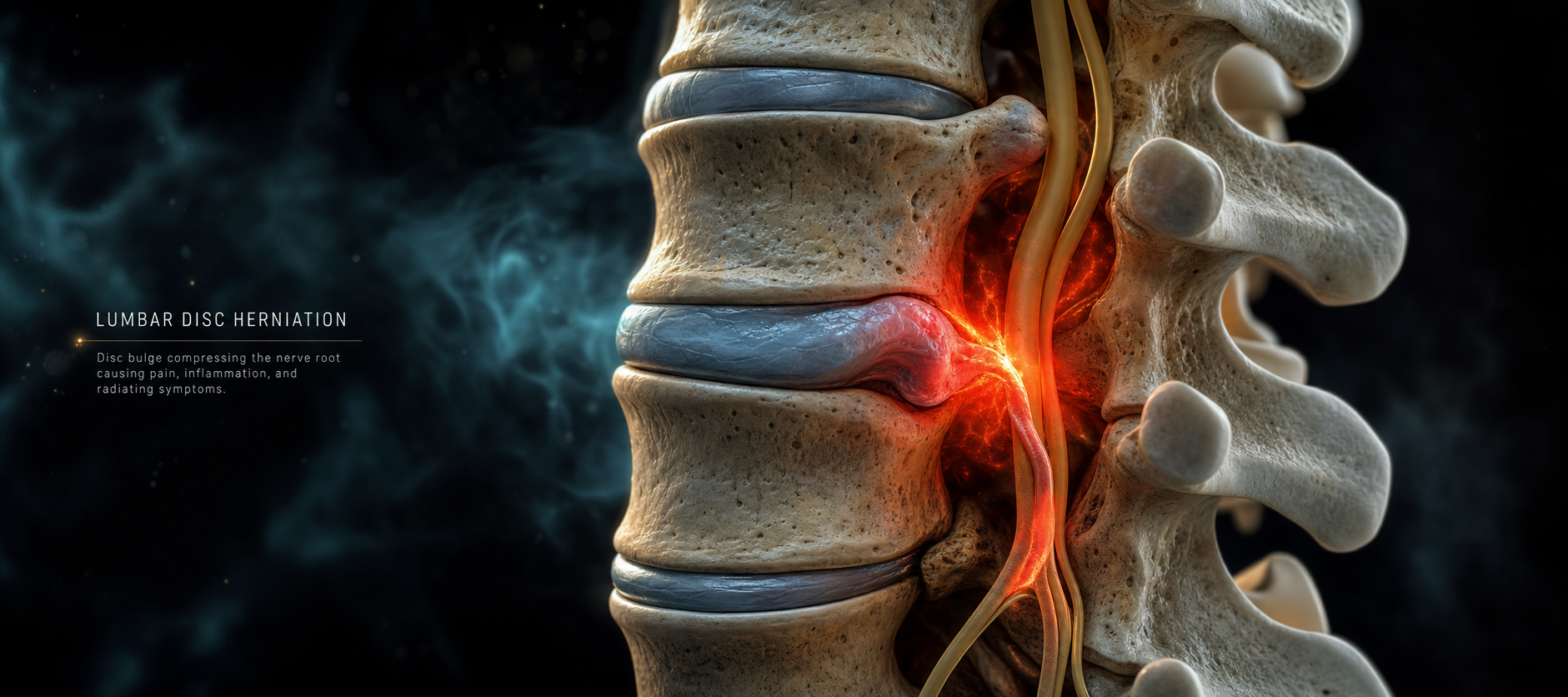
Herniated or Bulging Disc
Overview
Intervertebral discs act as shock absorbers between the vertebrae of the spine. When the soft inner core (nucleus pulposus) pushes through a tear in the disc's outer layer (annulus fibrosus), the result is a herniated disc. A bulging disc, while less severe, occurs when the disc extends beyond its normal boundary without fully rupturing. Both conditions can compress nearby nerve roots or the spinal cord itself, generating significant pain and neurological symptoms.
Common Symptoms
•Localized back or neck pain at the level of the affected disc
•Radiating pain into the arm (cervical disc) or leg/buttock (lumbar disc)
•Numbness or tingling along the nerve's distribution
•Muscle weakness in the affected extremity
•Pain that worsens with sitting, bending, or prolonged standing
•Sharp pain with sneezing, coughing, or straining
Common Causes
•Age-related disc degeneration and loss of disc hydration
•Repetitive bending, twisting, or heavy lifting
•Acute trauma such as a fall or motor vehicle accident
•Genetic predisposition to disc disease
•Sedentary lifestyle combined with poor core strength
•Excess body weight increasing spinal load
Who May Benefit from Treatment
Patients diagnosed with a herniated or bulging disc who are experiencing persistent pain, limited mobility, or neurological symptoms — and who wish to avoid or delay surgery — are ideal candidates for Echo PMR's interventional approach. Treatment is also appropriate after failed conservative care such as rest and over-the-counter medications.
Treatment Options at Echo PMR
•Epidural steroid injections — reduce disc-related nerve inflammation and provide significant pain relief
•Transforaminal epidural injections — precisely deliver corticosteroid to the targeted nerve root level
•Physical therapy — McKenzie-based and stabilization exercises to reduce disc pressure and improve spinal mechanics
•Trigger point injections — address secondary muscle spasm contributing to overall pain burden
•Medication management — anti-inflammatories, neuropathic medications, and short-term muscle relaxants
•Spinal cord stimulation — for cases of chronic discogenic pain refractory to other treatments
Recovery Expectations
Many patients with herniated discs improve substantially within 6–12 weeks with a combination of injections and targeted physical therapy. While some disc herniations reabsorb naturally over time, others require ongoing management. Echo PMR's goal is to minimize pain, restore function, and help you avoid unnecessary surgery wherever possible.
When to Seek Care
If your back or neck pain is accompanied by radiating limb pain, weakness, or changes in bladder or bowel function, do not wait — contact Echo PMR for a thorough evaluation. Early intervention can prevent worsening nerve damage and improve long-term outcomes.