
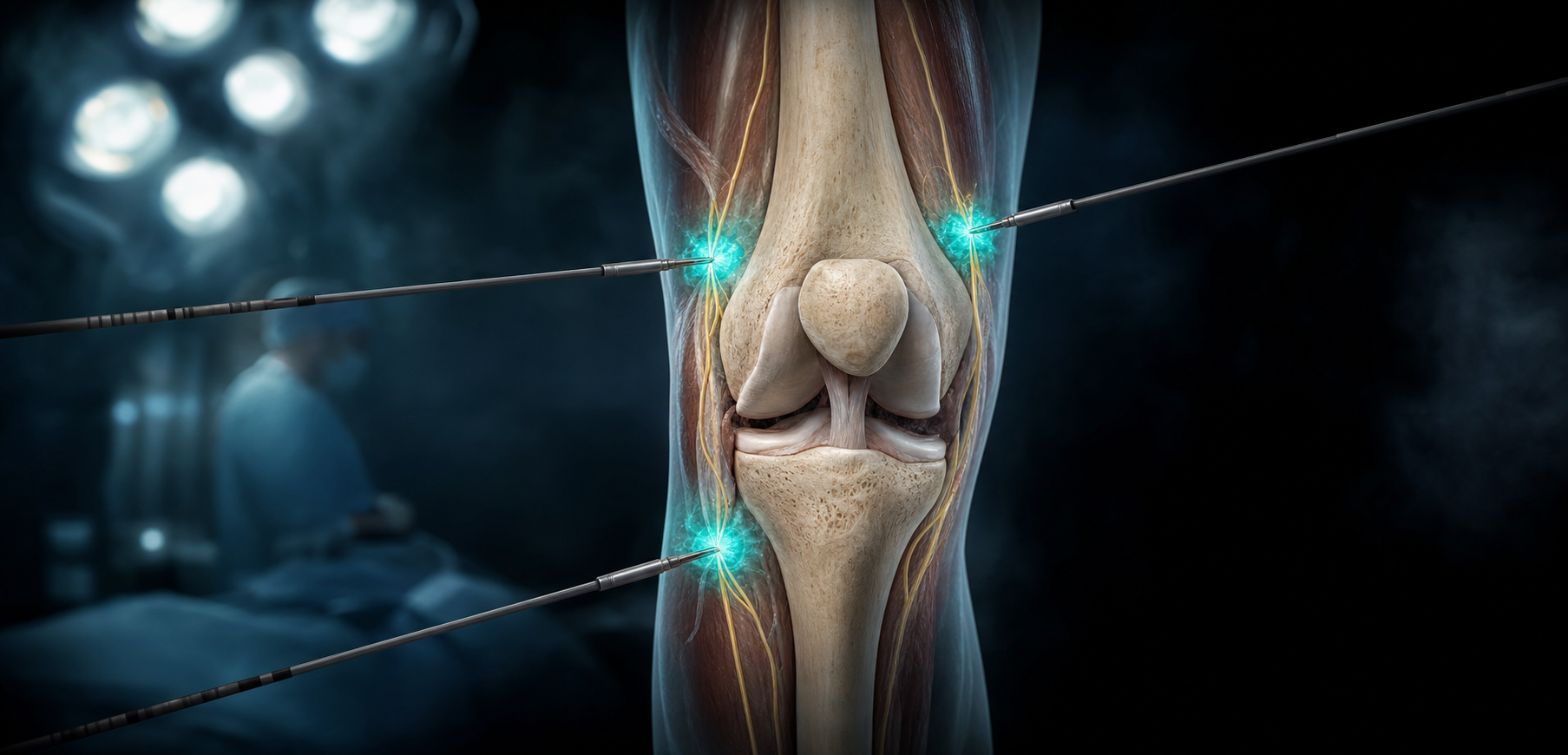
Genicular Nerve Block & Radiofrequency Ablation
What Is Genicular Nerve Block & Radiofrequency Ablation?
Genicular nerve block and radiofrequency ablation (RFA) is a two-stage, minimally invasive procedure designed to interrupt pain signals traveling from the knee to the brain. The genicular nerves are small sensory branches that wrap around the knee joint — blocking or ablating them can dramatically reduce pain without affecting motor function. This approach is especially effective for patients with chronic knee pain who are not ready for or have not responded well to surgery.
How It Works
•Diagnostic nerve block: A local anesthetic is injected near the genicular nerves to confirm they are the source of your knee pain. Significant temporary relief confirms you are a candidate for the next step.
•Radiofrequency ablation: Heat energy delivered through a thin needle disrupts nerve conduction, providing longer-lasting pain reduction — typically six months to two years.
•Fluoroscopic guidance: Live X-ray imaging ensures precise needle placement throughout the procedure.
What to Expect During the Procedure
•Preparation: You may be asked to avoid blood thinners for several days beforehand; bring a driver, as you should not drive after the procedure.
•Duration: The diagnostic block takes 15–20 minutes; the RFA procedure takes approximately 30–45 minutes.
•Anesthesia: Local anesthetic is used to numb the skin; mild IV sedation may be offered for comfort during RFA.
•Same-day recovery: Most patients rest briefly in the recovery area and go home within one hour.
•Post-procedure: Mild soreness around the injection sites is normal for a few days; ice and over-the-counter pain relievers help manage this.
Conditions Treated
•Chronic knee osteoarthritis
•Post-surgical knee pain
•Knee pain in patients who are not surgical candidates
•Failed total or partial knee replacement pain
•Chronic knee pain from rheumatoid arthritis
•Knee pain related to injury or trauma
Who Is a Good Candidate?
Patients who have moderate-to-severe chronic knee pain, have not found adequate relief from physical therapy or injections, and experience significant temporary improvement following a diagnostic genicular nerve block are typically excellent candidates for RFA.
Recovery & Results
Most patients notice increased comfort within one to three weeks as post-procedural soreness resolves and the ablation takes full effect. Relief commonly lasts six months to two years, and the procedure can be repeated if pain returns. Follow-up appointments help monitor your progress and coordinate any complementary therapies such as physical therapy or joint injections.
Frequently Asked Questions
How long does the pain relief last?
Results vary, but most patients experience meaningful relief for six months to two years. The procedure can be safely repeated when pain returns.
Will I still be able to bend my knee normally?
Yes. The genicular nerves targeted are purely sensory, so motor function and your ability to move the knee are not affected.
Is this covered by insurance?
Many commercial insurers and Medicare cover genicular nerve RFA when diagnostic block criteria are met. Our team will verify your specific benefits before scheduling.