
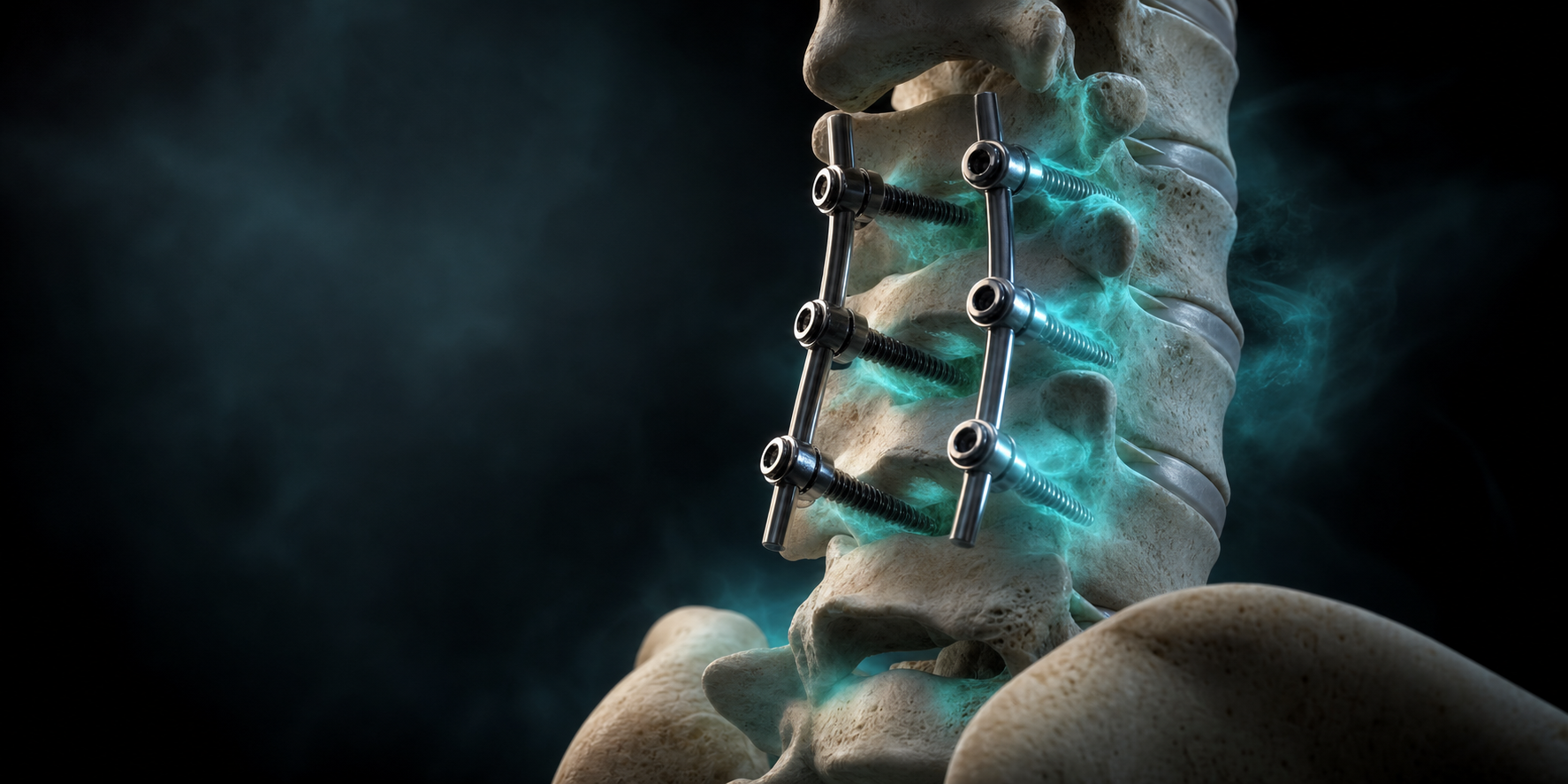
Failed Back Surgery Syndrome
Overview
Failed back surgery syndrome (FBSS) is a clinical term used to describe persistent or recurrent back or leg pain following technically successful spinal surgery. Despite the name, it does not imply surgical error — rather, it reflects the reality that spinal surgery does not eliminate pain in every patient. FBSS is estimated to affect 10–40% of patients after lumbar spine surgery and represents one of the most challenging chronic pain conditions, requiring specialized, multidisciplinary management.
Common Symptoms
•Continued or worsening lower back pain after a spinal procedure
•Radiating leg pain (sciatica) that did not resolve or returned after surgery
•New pain patterns different from the original pre-surgical symptoms
•Numbness, tingling, or weakness in the legs
•Restricted mobility and difficulty with daily activities
•Psychological distress, including depression and anxiety related to ongoing pain
Common Causes
•Epidural fibrosis (scar tissue) forming around the spinal cord or nerve roots post-operatively
•Recurrent disc herniation at the same or adjacent spinal level
•Adjacent segment disease — degeneration accelerated at levels above or below a fusion
•Incomplete decompression of the original nerve compression
•Spinal instability or hardware failure following fusion
•Central sensitization — the nervous system remaining in a heightened pain state
Who May Benefit from Treatment
Patients who have undergone one or more lumbar or cervical spine surgeries and continue to experience significant pain despite adequate healing time — typically 3–6 months post-operatively — are strong candidates for Echo PMR's evaluation. This includes patients who have been told "nothing more can be done" surgically.
Treatment Options at Echo PMR
•Spinal cord stimulation (SCS) — the gold-standard interventional therapy for FBSS; modulates pain signals at the spinal cord level and is FDA-approved for this indication
•Epidural steroid injections — reduce residual inflammation around nerve roots and scar tissue
•Lysis of adhesions (epidural adhesiolysis) — specialized technique to break down epidural scar tissue compressing nerve roots
•Medial branch blocks and radiofrequency ablation (RFA) — address the facet joint component common in post-fusion adjacent segment pain
•Medication management — tailored pharmacological support including neuropathic agents and carefully managed analgesics
•Interdisciplinary rehabilitation — physical therapy, behavioral health integration, and functional restoration programming
Recovery Expectations
FBSS is a complex condition, but it is not untreatable. Spinal cord stimulation in particular has demonstrated consistent evidence of 50% or greater pain reduction in appropriately selected FBSS patients, with meaningful improvements in function and quality of life. Echo PMR approaches each FBSS case individually, setting realistic goals focused on functional gains and reduced reliance on medication.
When to Seek Care
If you are months or years beyond your spinal surgery and still living with significant pain, you deserve a fresh evaluation by a pain management specialist. Contact Echo PMR — our team has the expertise and tools to identify what is driving your ongoing pain and offer evidence-based solutions.