
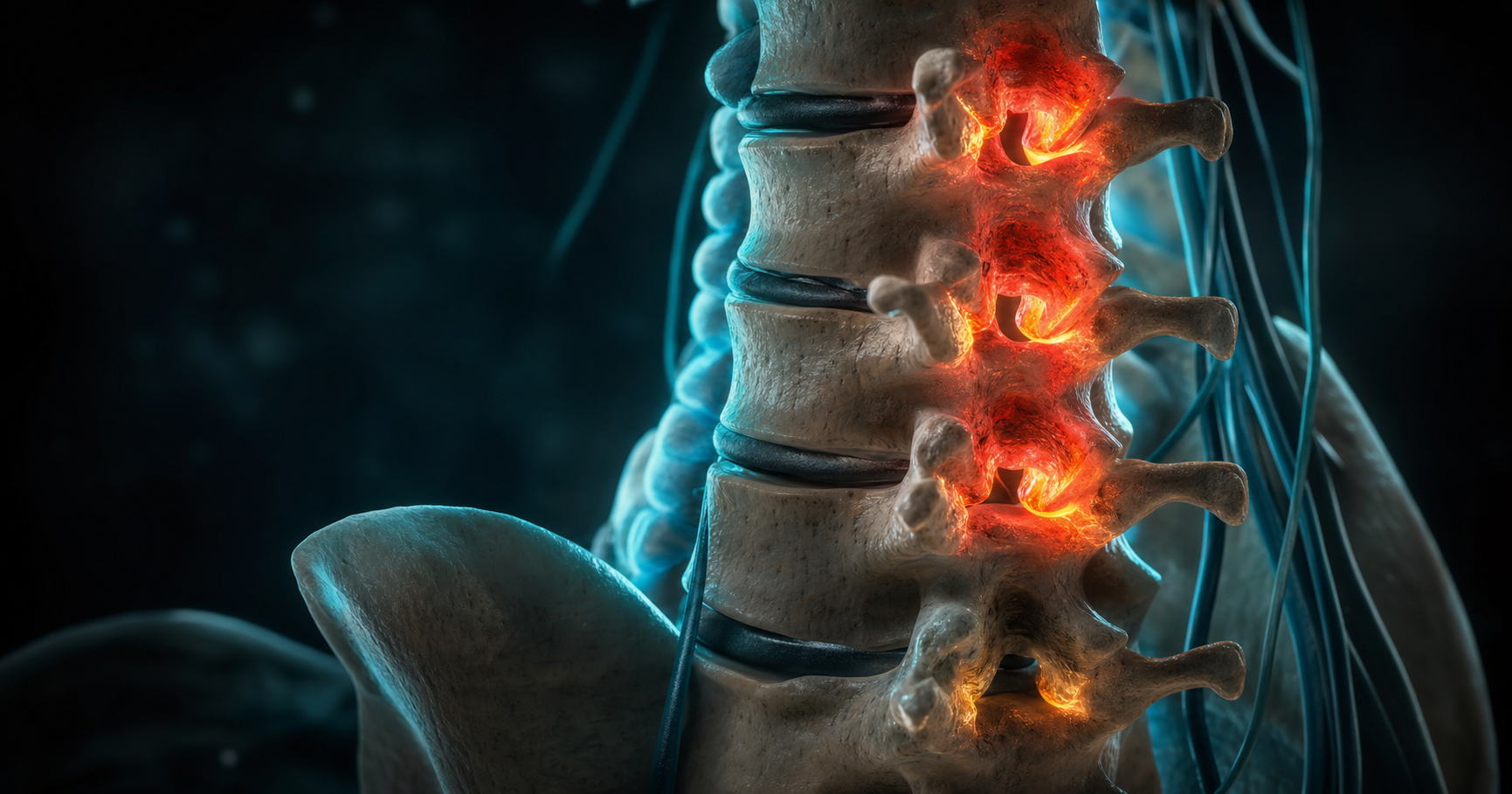
Facet Joint Syndrome
Overview
Facet joints are small paired joints located on the back of each vertebra that guide and stabilize spinal movement. When these joints become inflamed, arthritic, or injured, they generate a characteristic pattern of local and referred pain known as facet joint syndrome. The condition is among the most common causes of chronic axial (non-radiating) neck and lower back pain in adults and is highly responsive to targeted interventional treatment.
Common Symptoms
•Dull, aching pain localized to the neck or lower back
•Pain that worsens with spinal extension (leaning backward) or rotation
•Stiffness in the morning or after prolonged inactivity
•Referred pain into the shoulder and upper arm (cervical) or into the buttock and thigh (lumbar)
•Tenderness to touch along the affected spinal segment
•Headaches originating at the base of the skull (cervicogenic headache)
Common Causes
•Osteoarthritis and age-related cartilage degeneration within the facet joint
•Repetitive mechanical stress from poor posture or heavy labor
•Prior spinal injury or whiplash trauma
•Segmental instability following disc degeneration
•Inflammatory joint disease such as rheumatoid arthritis
•Post-surgical changes altering load distribution to facet joints
Who May Benefit from Treatment
Patients with chronic axial neck or back pain that is aggravated by extension movements and has not responded adequately to physical therapy or medications are strong candidates. Echo PMR uses diagnostic medial branch blocks to confirm facet joint involvement before proceeding to longer-lasting interventions.
Treatment Options at Echo PMR
•Medial branch blocks — diagnostic and therapeutic injections that anesthetize the nerves supplying the facet joints to confirm the pain source
•Radiofrequency ablation (RFA) — uses heat energy to disrupt the medial branch nerves, providing 12–24 months of sustained pain relief
•Intra-articular facet joint injections — corticosteroid injected directly into the joint to reduce acute inflammation
•Physical therapy — postural correction, spinal stabilization, and manual therapy to offload arthritic facet joints
•Medication management — NSAIDs, muscle relaxants, and topical agents as adjunctive therapy
•Trigger point injections — address associated paraspinal muscle spasm secondary to facet-mediated pain
Recovery Expectations
Medial branch blocks often provide immediate diagnostic clarity and short-term relief. When RFA is indicated and performed, patients typically experience significant pain reduction lasting 12–24 months, after which the procedure can be repeated. Physical therapy during the pain-free window following RFA is strongly encouraged to build long-term resilience.
When to Seek Care
If you have been living with persistent neck or back pain that limits your ability to turn your head, sit comfortably, or engage in daily activities, contact Echo PMR. Facet joint syndrome is reliably diagnosable and highly treatable — you don't need to accept chronic pain as inevitable.