
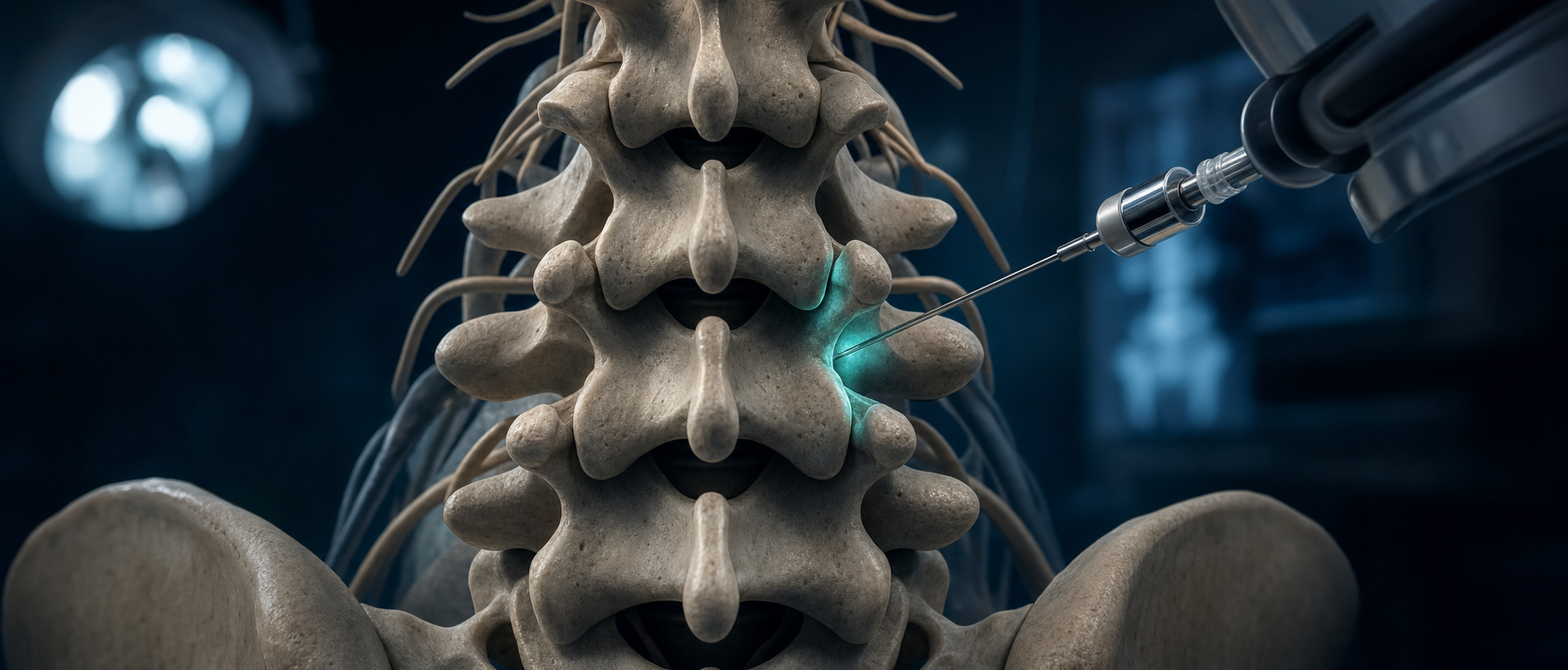
Facet Joint Injection
What Is a Facet Joint Injection?
Facet joints are small stabilizing joints located on each side of the vertebrae throughout the cervical, thoracic, and lumbar spine. When these joints become inflamed or arthritic, they can produce significant localized or referred pain. A facet joint injection delivers a combination of local anesthetic and corticosteroid directly into the affected joint capsule to reduce inflammation and relieve pain.
How It Works
The injection serves both a diagnostic and therapeutic purpose. If the local anesthetic temporarily eliminates your pain, it confirms the facet joint as the source. The corticosteroid component then works to reduce joint inflammation over the following days, providing longer-lasting relief. Fluoroscopic or ultrasound guidance ensures the medication reaches the correct joint.
•Diagnostic role: Confirms the facet joint as the pain generator
•Therapeutic role: Anti-inflammatory steroid reduces ongoing joint irritation
•Guided precision: Real-time imaging ensures accurate needle placement
What to Expect During the Procedure
•Preparation: You lie in a position that exposes the target joint; skin is sterilized and numbed
•Duration: 15–20 minutes total
•Guidance: Fluoroscopy (X-ray) is used to visualize the joint in real time
•Anesthesia: Local anesthetic at the skin surface; the joint injection itself may cause mild pressure
•Same-day recovery: Observation for 20–30 minutes; a driver is required for your return home
Conditions Treated
•Facet joint arthropathy (osteoarthritis of the spine)
•Lumbar facet syndrome
•Cervical facet pain with referred headache or shoulder pain
•Thoracic facet pain
•Spondylosis (age-related spinal degeneration)
•Post-traumatic facet joint pain (e.g., after a car accident)
Who Is a Good Candidate?
Patients with axial spine pain — pain localized to the neck or back without significant radiation into the arms or legs — that worsens with extension or rotation are often good candidates. Facet joint injections are particularly helpful when imaging suggests facet arthritis or when other spinal pain sources have been ruled out.
Recovery & Results
Mild soreness at the injection site is common for 24–48 hours following the procedure. Many patients notice improvement within 3–5 days as the steroid takes effect. Results typically last several weeks to months. If the facet joint is confirmed as the pain source, your physician may recommend a medial branch block followed by radiofrequency ablation for more durable relief.
Frequently Asked Questions
Q: What is the difference between a facet joint injection and a medial branch block?
A: A facet joint injection goes directly into the joint capsule, while a medial branch block targets the small nerves that carry pain signals from the joint. Both can be used diagnostically, but medial branch blocks are the required precursor to radiofrequency ablation.
Q: How long does the relief last?
A: Relief varies by patient, but many individuals experience improvement lasting several weeks to several months. Results depend on the severity of joint degeneration and individual response to the steroid.
Q: Is the procedure safe?
A: Facet joint injections are a well-established, low-risk procedure when performed by a board-certified specialist using image guidance. Your physician will discuss all risks and benefits with you beforehand.