
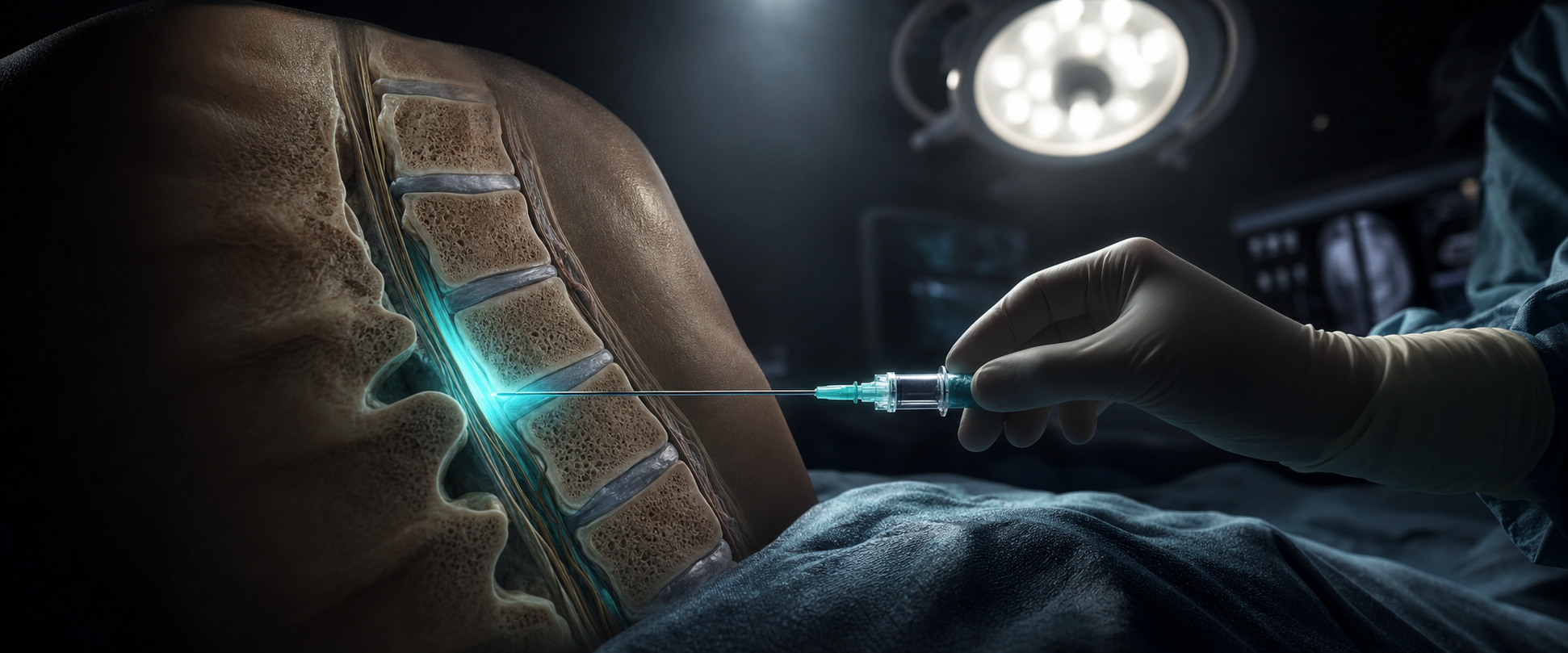
Epidural Steroid Injection
What Is an Epidural Steroid Injection?
An epidural steroid injection (ESI) is a minimally invasive procedure that delivers corticosteroid medication directly into the epidural space — the area surrounding the spinal cord and nerve roots. By targeting inflammation at its source, ESIs can significantly reduce pain caused by compressed or irritated spinal nerves. This treatment is commonly used when conservative options like physical therapy or oral medications have not provided adequate relief.
How It Works
Corticosteroids are powerful anti-inflammatory agents. When injected into the epidural space, they reduce swelling around irritated nerve roots, interrupting the pain signaling pathway. The injection may also include a local anesthetic for immediate, short-term relief while the steroid takes effect over the following days.
•Fluoroscopic guidance ensures precise needle placement
•Corticosteroid reduces nerve root inflammation
•Local anesthetic provides rapid, temporary relief
•Relief can last weeks to months depending on the underlying condition
What to Expect During the Procedure
•Preparation: You will lie face-down on a procedure table; the skin is cleansed and numbed with a local anesthetic
•Duration: The procedure typically takes 15–30 minutes from start to finish
•Guidance: A fluoroscope (live X-ray) is used to guide the needle to the exact target location
•Anesthesia: Local anesthetic only; most patients remain awake and comfortable
•Same-day recovery: You will rest in our recovery area for 20–30 minutes and can typically go home the same day; arrange a driver
Conditions Treated
•Herniated or bulging disc (lumbar or cervical)
•Lumbar radiculopathy (sciatica)
•Spinal stenosis
•Degenerative disc disease
•Cervical radiculopathy (arm and hand pain)
•Post-laminectomy syndrome (failed back surgery syndrome)
Who Is a Good Candidate?
Ideal candidates are patients experiencing moderate to severe pain radiating from the spine into the arms or legs that has not responded to conservative treatments. ESIs are not appropriate for patients with active infections, uncontrolled diabetes, or bleeding disorders — your Echo PMR physician will review your full medical history before recommending this procedure.
Recovery & Results
Most patients experience some soreness at the injection site for 24–48 hours. Initial relief from the local anesthetic may wear off before the steroid begins working, typically within 3–7 days. Many patients achieve meaningful pain relief lasting several weeks to months, and a series of up to three injections per year may be recommended to sustain results. Relief duration varies based on the diagnosis, severity, and individual response.
Frequently Asked Questions
Q: How many epidural steroid injections can I receive?
A: Most guidelines recommend no more than three injections in a 12-month period to minimize potential steroid-related side effects. Your physician will determine the appropriate frequency based on your response.
Q: Will the injection hurt?
A: The injection site is numbed with local anesthetic first, so most patients feel only mild pressure. Temporary soreness at the site for a day or two is normal.
Q: How quickly will I feel relief?
A: The local anesthetic may provide relief within hours, but it is temporary. The corticosteroid effect typically begins within 3–7 days and can last weeks to months.