
Cervicogenic Headaches
Overview
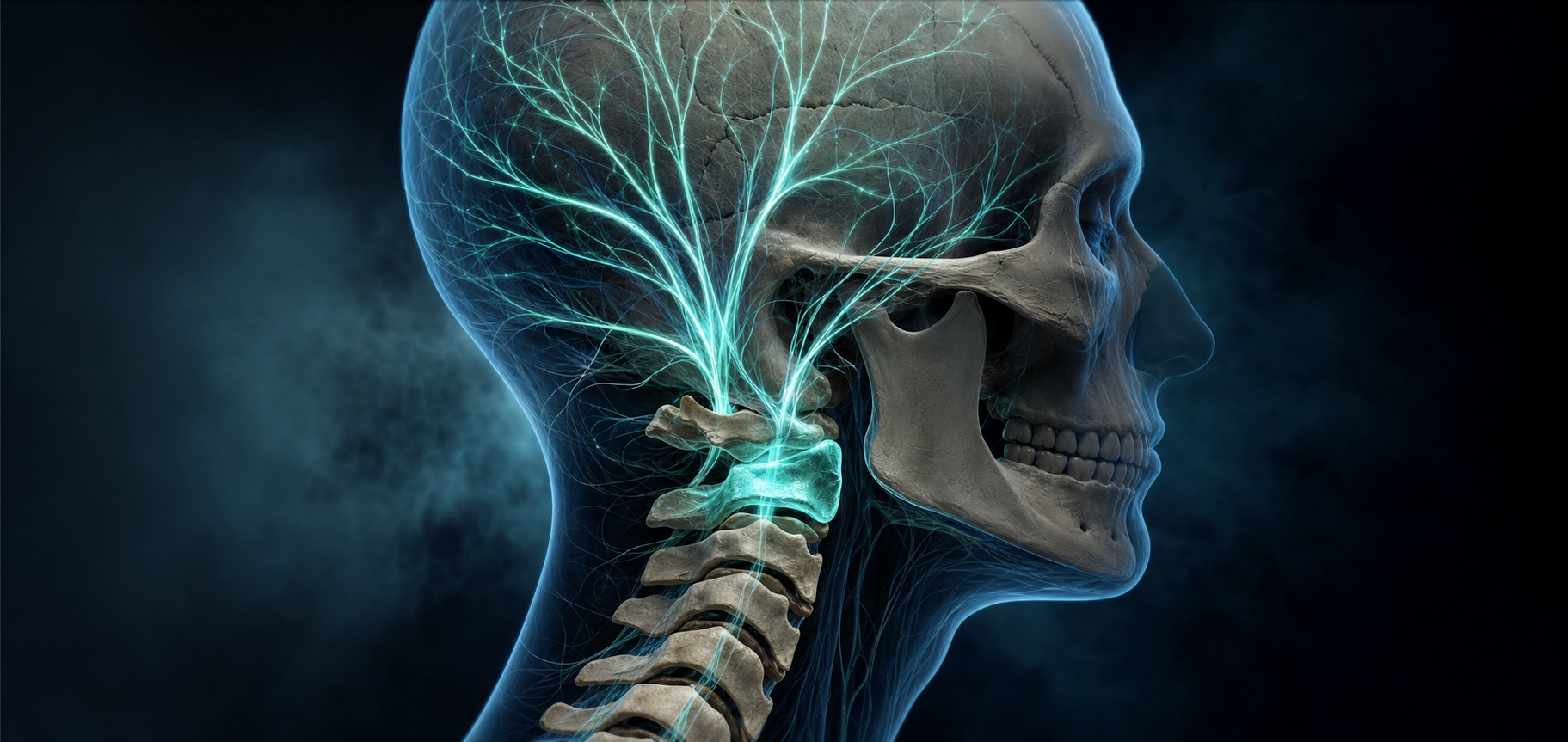
Cervicogenic headache (CGH) is a secondary headache disorder — meaning the pain originates not in the brain itself, but from structures in the cervical spine and upper neck, including the facet joints, discs, and surrounding musculature. Pain is typically referred from these structures to the head via the trigeminal-cervical complex, producing headaches that can closely mimic migraine or tension-type headache. Correct diagnosis is essential, because CGH responds to neck-targeted treatments rather than conventional migraine therapies.
Common Symptoms
•Unilateral head pain that begins in the neck or back of the head and radiates forward
•Headache that worsens with specific neck movements or sustained postures
•Reduced range of motion in the cervical spine on the same side as the headache
•Ipsilateral shoulder or arm discomfort accompanying the headache
•Nausea in some patients, but typically without the photophobia or phonophobia of true migraine
•Steady, non-throbbing head pain (in contrast to the pulsating quality of migraine)
Common Causes
•Cervical facet joint arthritis or degeneration (particularly at C2–C3 and C3–C4)
•Whiplash injury or other neck trauma
•Cervical disc herniation with upper nerve root involvement
•Prolonged poor neck posture (forward head position from screen use)
•Atlantoaxial joint dysfunction at the C1–C2 level
•Prior cervical surgery with adjacent segment stress
Who May Benefit from Treatment
Patients who have been treated for migraines or tension headaches without satisfactory relief — particularly those whose headaches consistently begin in the neck or are associated with neck stiffness and limited movement — should be evaluated for cervicogenic headache. Individuals with known cervical spine disease, a history of whiplash, or occupations requiring prolonged neck flexion are at elevated risk and deserve a targeted assessment.
Treatment Options at Echo PMR
•Cervical medial branch blocks to confirm and treat facet joint-mediated cervicogenic headache
•Radiofrequency ablation (RFA) of cervical medial branches for long-lasting relief (typically 12–24 months per treatment)
•C2–C3 nerve blocks / third occipital nerve (TON) block targeting the specific cervical joint level most commonly responsible for CGH
•Epidural steroid injections when disc herniation or cervical nerve root irritation contributes to headache generation
•Trigger point injections into the cervical and suboccipital musculature
•Physical therapy coordination focusing on cervical stabilization, postural correction, and manual therapy
Recovery Expectations
Diagnostic medial branch blocks that confirm the pain source allow Echo PMR to offer radiofrequency ablation — a procedure that provides substantial, durable headache reduction in the majority of appropriate candidates. Many patients experience a 50% or greater reduction in headache frequency and intensity following RFA, with effects lasting 12 to 24 months. Physical therapy concurrent with interventional procedures addresses the underlying mechanical contributors and reduces the likelihood of recurrence.
When to Seek Care
If your headaches consistently originate in the neck, are triggered or worsened by head and neck movement, and have not responded adequately to migraine medications, contact Echo PMR for a comprehensive cervicogenic headache evaluation. Treating the correct source — the cervical spine — is the key to meaningful and lasting relief.