
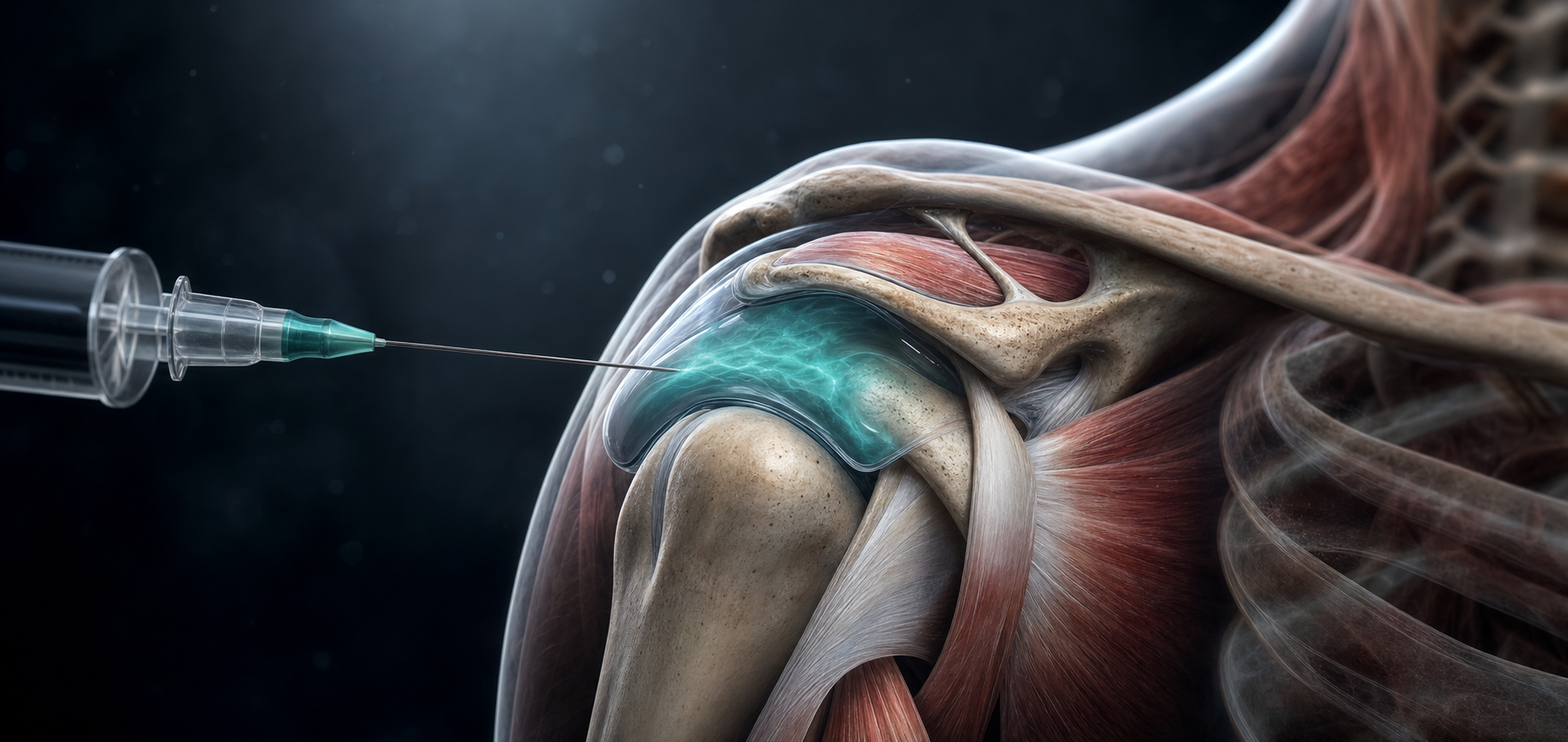
Bursa Injection
What Is a Bursa Injection?
Bursae are small, fluid-filled sacs that cushion the tendons, muscles, and bones near your joints. When a bursa becomes inflamed — a condition known as bursitis — it causes significant localized pain, swelling, and tenderness. A bursa injection delivers a corticosteroid (anti-inflammatory medication) combined with a local anesthetic directly into the inflamed sac, targeting the inflammation at its source and providing fast, effective relief.
How It Works
•Using anatomical landmarks or ultrasound guidance, a thin needle is directed precisely into the bursal sac.
•A combination of corticosteroid and local anesthetic is injected, reducing inflammation within the bursa and providing immediate anesthetic relief.
•The corticosteroid continues to work over the following days, often resolving the inflammatory cycle that sustains bursitis.
What to Expect During the Procedure
•Preparation: The skin is cleaned and a local anesthetic may be applied to the surface prior to injection.
•Duration: The procedure takes 10–20 minutes including patient positioning and preparation.
•Anesthesia: Local anesthetic is used; no sedation is required.
•Guidance: Ultrasound imaging may be used for deep or complex bursae (hip, shoulder, ischial) to ensure precision.
•Same-day recovery: Patients are typically able to drive home and resume light activity the same day.
Conditions Treated
•Trochanteric bursitis (hip/outer thigh pain)
•Subacromial bursitis (shoulder pain)
•Olecranon bursitis (elbow)
•Pes anserine bursitis (inner knee)
•Retrocalcaneal bursitis (heel/Achilles area)
•Ischial bursitis (buttock pain with sitting)
Who Is a Good Candidate?
Patients with confirmed bursitis — typically presenting as localized pain and tenderness over a specific bursal region — who have not improved with rest, ice, oral NSAIDs, or physical therapy after 2–4 weeks are good candidates. Bursa injections are also appropriate for patients who cannot tolerate oral anti-inflammatory medications.
Recovery & Results
Most patients experience a noticeable reduction in pain and swelling within 3–7 days of the injection as the corticosteroid takes full effect. Relief typically lasts 1–3 months, and for many patients, a single injection combined with a stretching or physical therapy program resolves the bursitis episode entirely. If symptoms return, additional injections may be given, though a physical therapy program is recommended alongside to address any underlying biomechanical contributors.
Frequently Asked Questions
Will one injection be enough?
Many patients find lasting relief after one or two injections, particularly if they also address the activity or movement patterns that contributed to bursitis. Some chronic cases require periodic treatment.
What is the difference between a bursa injection and a joint injection?
A bursa injection targets the fluid-filled sac outside the joint, while a joint injection delivers medication inside the joint space itself. They are distinct structures, and your physician will confirm the correct target based on your diagnosis.
Is there anything I should avoid after the injection?
We recommend avoiding strenuous activity of the affected area for 24–48 hours. After that, gentle movement and physical therapy exercises are encouraged to prevent recurrence.